Kennett Square Historic District

Why it's listed
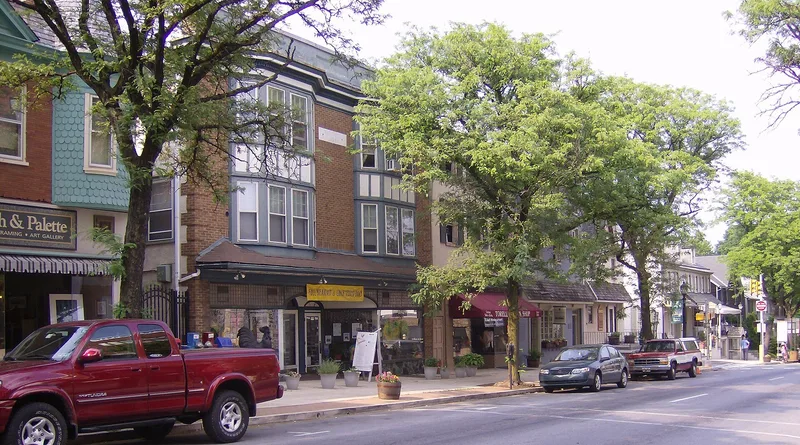
Centered on the crossroads of Union and State streets in Kennett Square, Chester County, this district holds about 565 buildings, most of them brick or stone and built between the early nineteenth century and 1938. Its commercial core grew after the borough was incorporated in 1855 and the Philadelphia and Baltimore Central Railroad reached the town. Blocks such as the Unicorn Block of 1877 and the Chalfant block of 1882 still anchor the main intersection, and many storefronts continue in shop use. The district also preserves industrial works, including the American Road Machine Company complex on South Broad Street and an 1903 condensed-milk plant on Birch Street. Mushroom growing, begun in the 1890s, is represented by an early growing house of about 1900. Architecturally the district shows Georgian, Federal, Italianate, Queen Anne and Colonial Revival styles, many built by local builders from pattern books. Its Kennett Consolidated School of 1930-31 was funded largely by Pierre S. du Pont.
Machine-generated summary. This summary was generated by a language model from the official nomination document and has not been reviewed line by line by an editor. It may contain errors. Check the source document before relying on any detail. Source: nomination document (PDF) · catalog entry. Generated October 2026 (model claude-haiku-5-5, prompt v1.1-2026-10-29).
| Period of significance | 1800-1938 |
|---|---|
| Styles | Federal, Gothic, Italianate, Queen Anne, Stick, Colonial Revival |
| Areas of significance | Industry, Commerce, Architecture |
| Acreage | 137 |
| Boundary source | NPS cultural-resource GIS polygon |
| Full listing page | Kennett Square Historic District (property record) |
What listing means for this property
This is a historic district. Buildings within its boundary are either contributing (they add to the district's significance) or non-contributing. Owners of contributing income-producing buildings can claim the 20% federal rehabilitation tax credit; homeowners should look at state credits. National Register districts impose no design review by themselves; a local historic district ordinance, if one exists, does (the difference explained).
General information, not legal or tax advice. Rules change; confirm with your State Historic Preservation Office or a qualified adviser.