Isabella Furnace

The National Park Service has not published a boundary polygon for this district; the map shows the listed properties inside it and the district's reference point.
Why it's listed
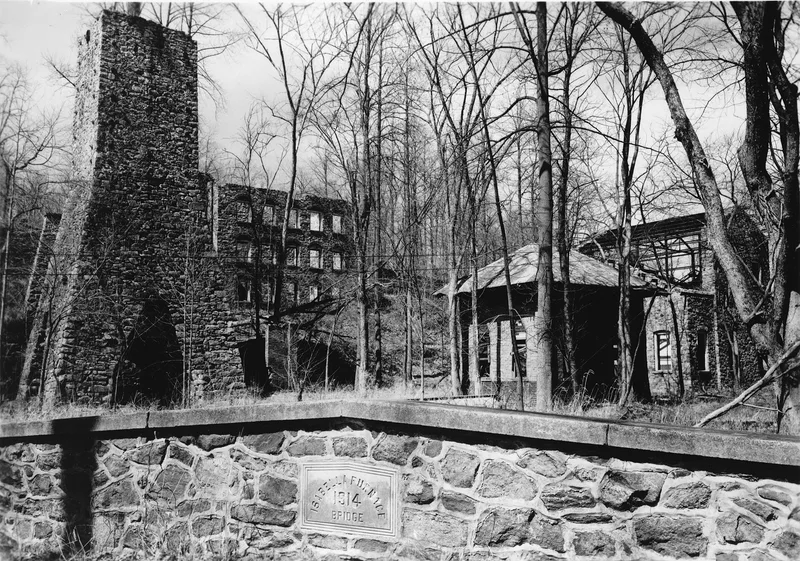
Built in 1835 by Henry Potts and John P. Rutter on forty-nine acres that already held a sawmill and a fulling mill, Isabella Furnace was an iron-smelting complex on Perkins Run in Chester County. David Potts managed the furnace from 1836 and secured ore from the St. Peter's and St. Mary's mines. After a sale in 1856 to John Irey and James Butler, and later to the Smith brothers in 1864, Col. Joseph Potts reacquired it by 1880, converting the hot blast drive to steam power and building a brick engine house. A narrow gauge siding from the Pennsylvania Railroad's Downingtown branch reached the site. The furnace closed in 1894, when it had ceased to be profitable. Its significance lies in its long operating life, its late construction in the county, and a stone arch railroad bridge that carried rail cars into the charcoal house.
Machine-generated summary. This summary was generated by a language model from the official nomination document and has not been reviewed line by line by an editor. It may contain errors. Check the source document before relying on any detail. Source: nomination document (PDF) · catalog entry. Generated October 2026 (model claude-haiku-5-5, prompt v1.1-2026-10-29).
| Period of significance | 1835-1894 |
|---|---|
| Areas of significance | Industry |
| Acreage | 4 |
| Boundary source | not published |
| Full listing page | Isabella Furnace (property record) |
What listing means for this property
This is a historic district. Buildings within its boundary are either contributing (they add to the district's significance) or non-contributing. Owners of contributing income-producing buildings can claim the 20% federal rehabilitation tax credit; homeowners should look at state credits. National Register districts impose no design review by themselves; a local historic district ordinance, if one exists, does (the difference explained).
General information, not legal or tax advice. Rules change; confirm with your State Historic Preservation Office or a qualified adviser.