Hutchinson Farm

Why it's listed
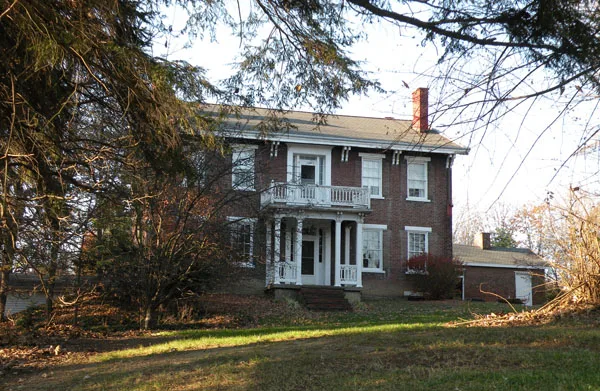
Elizabeth Township, Allegheny County, is the setting for this farm, whose two-story brick farmhouse was built in 1865 and shows vernacular Victorian design with Italianate and Gothic Revival features. The house has a five-bay front, a two-room-deep center hall plan, bracketed cornices and a two-story porch with keyhole-and-lozenge fretwork. Its interior keeps thirteen-foot ceilings, deeply grooved moldings and a hexagonal newel post. Outbuildings include a brick smokehouse with hourglass-shaped ventilators, a springhouse banked into the ground with a stone front probably added around 1900, and a terra cotta block dairy barn of the 1930s. The Hutchinson family owned the land from 1822, when Joseph Hutchinson bought 135 acres. The property is significant as one of the most intact nineteenth-century farms in the county, with a rural setting largely unaffected by suburban development.
Machine-generated summary. This summary was generated by a language model from the official nomination document and has not been reviewed line by line by an editor. It may contain errors. Check the source document before relying on any detail. Source: nomination document (PDF) · catalog entry. Generated October 2026 (model claude-haiku-5-5, prompt v1.1-2026-10-29).
| Period of significance | 1800-1899 |
|---|---|
| Styles | Vernacular Victorian with Italianate and Gothic Revival elements |
| Areas of significance | Agriculture, Architecture |
| Acreage | 56.5 |
| Boundary source | NPS cultural-resource GIS polygon |
| Full listing page | Hutchinson Farm (property record) |
What listing means for this property
This is a historic district. Buildings within its boundary are either contributing (they add to the district's significance) or non-contributing. Owners of contributing income-producing buildings can claim the 20% federal rehabilitation tax credit; homeowners should look at state credits. National Register districts impose no design review by themselves; a local historic district ordinance, if one exists, does (the difference explained).
General information, not legal or tax advice. Rules change; confirm with your State Historic Preservation Office or a qualified adviser.