Hayes Mill House

The National Park Service has not published a boundary polygon for this district; the map shows the listed properties inside it and the district's reference point.
Why it's listed
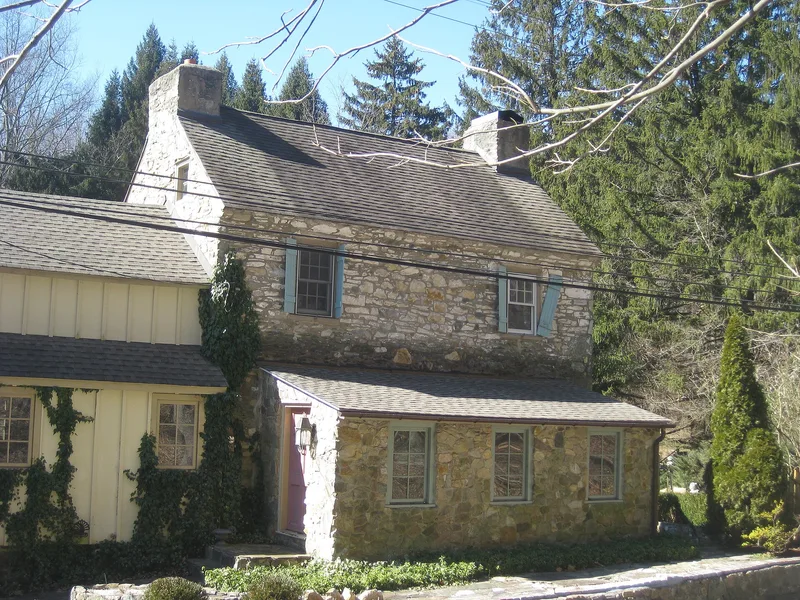
Built around 1780 as a tenant house for a nearby whetstone quarry, this two-story stone house in Newlin Township, Chester County, Pennsylvania, follows the English hall and parlor plan typical of vernacular Colonial building. Its stone core remains easily visible beneath later additions, including a two-story east wing and an enclosed front porch. The house is distinguished by a corbeled stone cornice, seldom seen in this part of Chester County, and by chimneys formed from the stone gable walls. Two other buildings in the West Branch Brandywine Scenic River Corridor have similar cornices. The house is also tied to the Hayes Whetstone Mill and Quarry, opened by Mordecai Hayes about 1780. Under his nephew-line successor Jacob Hayes, the operation used a water-powered mill to dress stones. Whetstones were sold in Philadelphia, Wilmington, and West Chester. Production ended in the 1870s or 1880s. The house is one of the few surviving remnants of this milling industry.
Machine-generated summary. This summary was generated by a language model from the official nomination document and has not been reviewed line by line by an editor. It may contain errors. Check the source document before relying on any detail. Source: nomination document (PDF) · catalog entry. Generated October 2026 (model claude-haiku-5-5, prompt v1.1-2026-10-29).
| Styles | Colonial English (vernacular, English hall/parlor plan) |
|---|---|
| Areas of significance | Industry, Architecture |
| Acreage | 0.8 |
| Boundary source | not published |
| Full listing page | Hayes Mill House (property record) |
What listing means for this property
This is a historic district. Buildings within its boundary are either contributing (they add to the district's significance) or non-contributing. Owners of contributing income-producing buildings can claim the 20% federal rehabilitation tax credit; homeowners should look at state credits. National Register districts impose no design review by themselves; a local historic district ordinance, if one exists, does (the difference explained).
General information, not legal or tax advice. Rules change; confirm with your State Historic Preservation Office or a qualified adviser.