Harrisburg Military Post

Why it's listed
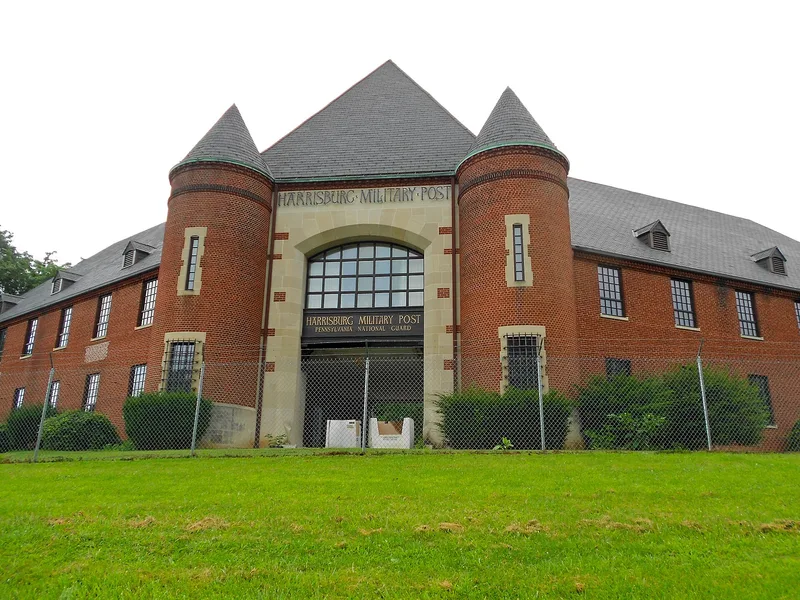
Built mostly between 1929 and 1938 on a twenty-eight acre lot south of U.S. Route 22 and west of Fifteenth Street, this complex of brick buildings in French Renaissance and Tudor Revival styles served as the armory of the 104th Cavalry, a Pennsylvania National Guard unit. Stables Nos. 1 through 4 were erected between 1929 and 1932 to replace horses kept in rented and fire-prone buildings across the city, and the Gun Shed of 1930 sheltered horse-drawn caissons. The three-story Administration Building, completed in 1938 and designed by M. Edwin Green of Laurie and Green, has two wings joined by a drive-through archway flanked by conical-roofed towers. Thomas H. Atherton, a Wilkes Barre architect, designed the Warehouse and the stables. The post is regarded as the largest concentration of armory architecture in its multiple property group. After World War II the unit was mechanized, and vehicle storage buildings and a maintenance shop were added for its tanks and trucks.
Machine-generated summary. This summary was generated by a language model from the official nomination document and has not been reviewed line by line by an editor. It may contain errors. Check the source document before relying on any detail. Source: nomination document (PDF) · catalog entry. Generated October 2026 (model claude-haiku-5-5, prompt v1.1-2026-10-29).
| Period of significance | 1929-1939 |
|---|---|
| Styles | French Renaissance; Tudor Revival |
| Areas of significance | Military, Architecture |
| Acreage | 28 |
| Boundary source | NPS cultural-resource GIS polygon |
| Full listing page | Harrisburg Military Post (property record) |
What listing means for this property
This is a historic district. Buildings within its boundary are either contributing (they add to the district's significance) or non-contributing. Owners of contributing income-producing buildings can claim the 20% federal rehabilitation tax credit; homeowners should look at state credits. National Register districts impose no design review by themselves; a local historic district ordinance, if one exists, does (the difference explained).
General information, not legal or tax advice. Rules change; confirm with your State Historic Preservation Office or a qualified adviser.