Harriman Historic District

Why it's listed
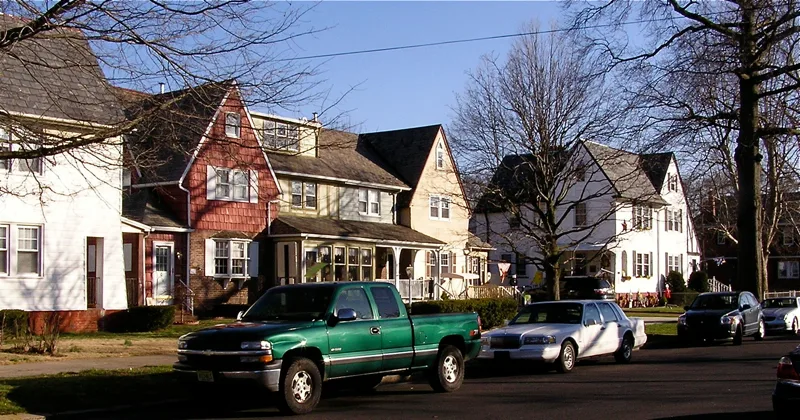
Harriman is a planned residential district in the northernmost ward of Bristol, Bucks County, Pennsylvania, laid out within an oval plan around a tree-lined boulevard called Wilson Avenue. The Emergency Fleet Corporation financed its construction beginning in early 1918 to house workers at the nearby shipyard on the Delaware River. The district contains 109 residential buildings, most of them frame multi-family dwellings with steep slate roofs in Tudor Revival and Colonial Revival styles, along with thirteen bungalows for foremen. Blocks were arranged symmetrically, with identical buildings facing each other across the streets. The community was built as a self-sufficient town, with its own utilities, a central heating plant, police and fire departments. It was the largest single EFC housing project in the country, and it is significant for its link to the wartime shipbuilding effort and for its planned, worker-focused design. Many buildings have since been altered, but the district still conveys its original character.
Machine-generated summary. This summary was generated by a language model from the official nomination document and has not been reviewed line by line by an editor. It may contain errors. Check the source document before relying on any detail. Source: nomination document (PDF) · catalog entry. Generated October 2026 (model claude-haiku-5-5, prompt v1.1-2026-10-29).
| Period of significance | 1907-1921 |
|---|---|
| Styles | Tudor Revival and Colonial Revival (multi-family EFC housing); bungalows for foremen |
| Areas of significance | Industry, Community Planning and Development, Politics/Government |
| Acreage | 17 |
| Boundary source | NPS cultural-resource GIS polygon |
| Full listing page | Harriman Historic District (property record) |
What listing means for this property
This is a historic district. Buildings within its boundary are either contributing (they add to the district's significance) or non-contributing. Owners of contributing income-producing buildings can claim the 20% federal rehabilitation tax credit; homeowners should look at state credits. National Register districts impose no design review by themselves; a local historic district ordinance, if one exists, does (the difference explained).
General information, not legal or tax advice. Rules change; confirm with your State Historic Preservation Office or a qualified adviser.