Harbison-Walker Refractories Company

Why it's listed
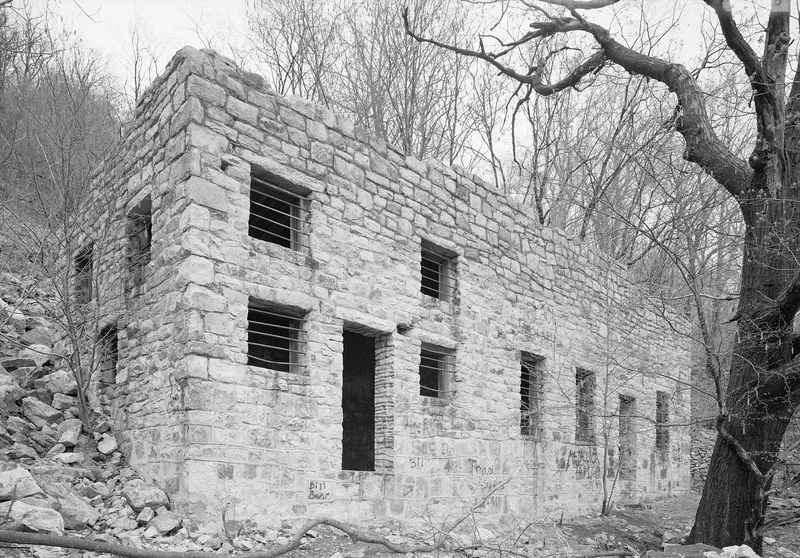
Along the northwest edge of Mount Union, on the east flank of Jacks Mountain, sits a refractory brick complex built in two adjacent works. The W.H. Haws Company of Johnstown began the plant in 1898-99, and in 1900 Harbison and Walker of Pittsburgh acquired the entire property. It was the first works in the United States built exclusively for refractory brick manufacture. The No. 2 works was begun in 1903 and completed in 1905, and the two plants were designed to run independently. By 1910 the combined operation employed more than 600 men and could produce 150,000 bricks a day. Two railroads served the site: the East Broad Top supplied coal for the kilns and boilers, and the Pennsylvania Railroad handled shipments. The district is regarded as a good example of a refractory complex because it keeps its original storage sheds, production buildings and offices, and its kilns remain connected by underground heating tunnels. Its ganister rock supply and its early origin give it local importance.
Machine-generated summary. This summary was generated by a language model from the official nomination document and has not been reviewed line by line by an editor. It may contain errors. Check the source document before relying on any detail. Source: nomination document (PDF) · catalog entry. Generated October 2026 (model claude-haiku-5-5, prompt v1.1-2026-10-29).
| Period of significance | 1899-1939 |
|---|---|
| Areas of significance | Industry |
| Acreage | 21 |
| Boundary source | NPS cultural-resource GIS polygon |
| Full listing page | Harbison-Walker Refractories Company (property record) |
What listing means for this property
This is a historic district. Buildings within its boundary are either contributing (they add to the district's significance) or non-contributing. Owners of contributing income-producing buildings can claim the 20% federal rehabilitation tax credit; homeowners should look at state credits. National Register districts impose no design review by themselves; a local historic district ordinance, if one exists, does (the difference explained).
General information, not legal or tax advice. Rules change; confirm with your State Historic Preservation Office or a qualified adviser.