Hamorton Historic District (Additional Documentation)

Why it's listed
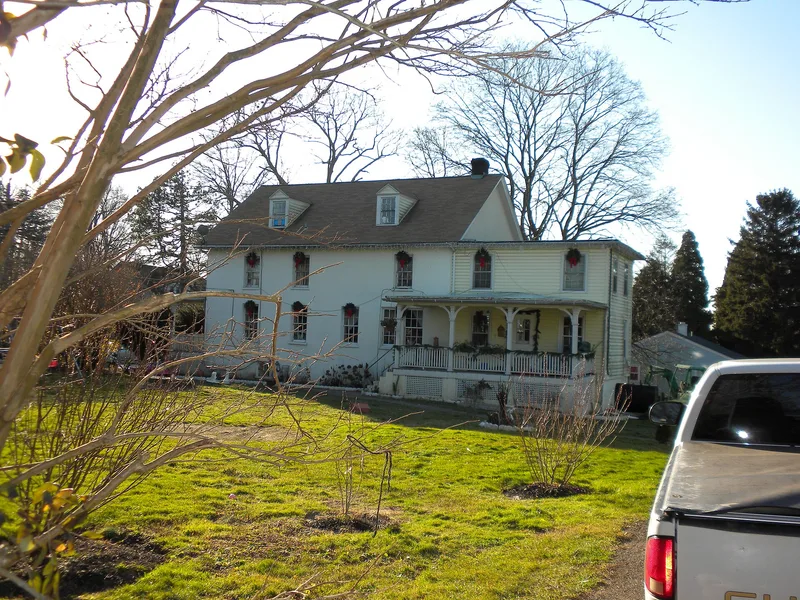
Hamorton is a village of brick, frame and stone houses on a plateau at the crossing of Baltimore Pike and the Wilmington Road in Kennett Township, Chester County. Its older core was laid out in the 1830s on narrow lots from the Ezekiel Webb estate, with houses fronting the pike and service alleys behind. Abraham Hamor, who gained a post office in 1831, built many of these houses, and the village grew into a trading centre with a general store, a doctor's office and craft workshops. In the 1840s and 1850s it became a centre of abolitionism in Chester County. Dr. Bartholomew Fussell's public hall, dedicated in April 1846, hosted anti-slavery speakers, and Sarah Harvey Pearson ran a free store that refused goods produced by slave labour. In 1928-1930 P.S. duPont added about eighteen detached houses on treed lots to the north, designed by Edward William Martin. Several are Georgian Revival and the rest Colonial Revival.
Machine-generated summary. This summary was generated by a language model from the official nomination document and has not been reviewed line by line by an editor. It may contain errors. Check the source document before relying on any detail. Source: nomination document (PDF) · catalog entry. Generated October 2026 (model claude-haiku-5-5, prompt v1.1-2026-10-29).
| Period of significance | 1830-1930 |
|---|---|
| Styles | Gothic Revival; Colonial Revival; Georgian Revival |
| Areas of significance | Commerce, Architecture, Social History |
| Acreage | 32.5 |
| Boundary source | NPS cultural-resource GIS polygon |
| Full listing page | Hamorton Historic District (Additional Documentation) (property record) |
What listing means for this property
This is a historic district. Buildings within its boundary are either contributing (they add to the district's significance) or non-contributing. Owners of contributing income-producing buildings can claim the 20% federal rehabilitation tax credit; homeowners should look at state credits. National Register districts impose no design review by themselves; a local historic district ordinance, if one exists, does (the difference explained).
General information, not legal or tax advice. Rules change; confirm with your State Historic Preservation Office or a qualified adviser.