Goshenville Historic District

Why it's listed
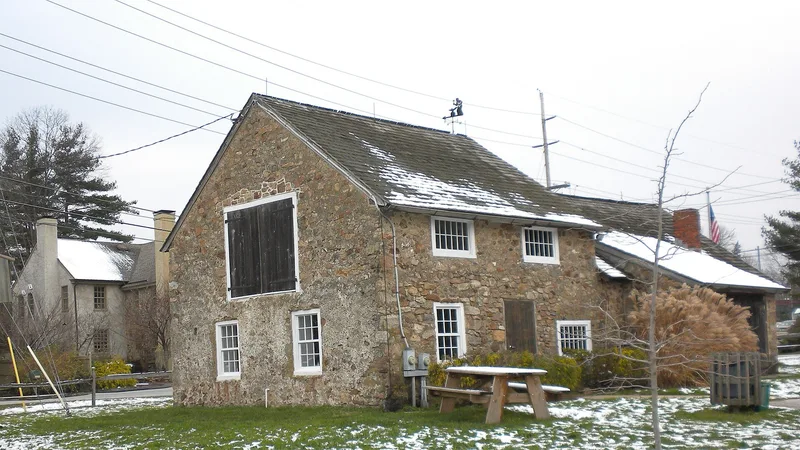
Goshenville is a linear village of stone and stucco buildings along North Chester Road in East Goshen Township, Chester County, grown up around a Quaker meeting founded in 1702. Settlers from the Welsh Tract began farming here in 1683, and the meeting's first log house was built on land given in 1708. The 1855 Hicksite meetinghouse, a stucco building with two entrances and a divided interior, stands beside the Greek Revival Orthodox meetinghouse of 1849, built of serpentine stone. Two Quaker cemeteries lie between them, including a burial ground with markers from the early 1800s. The village also includes a blacksmith and wheelwright shop of about 1740, which operated until 1940, and a general store and post office begun in 1806. The district is regarded as an intact record of Quaker settlement, worship, schism and reconciliation, and of the rural village that formed around it.
Machine-generated summary. This summary was generated by a language model from the official nomination document and has not been reviewed line by line by an editor. It may contain errors. Check the source document before relying on any detail. Source: nomination document (PDF) · catalog entry. Generated October 2026 (model claude-haiku-5-5, prompt v1.1-2026-10-29).
| Period of significance | c. 1740-c. 1880 |
|---|---|
| Styles | Greek Revival |
| Areas of significance | Community Planning and Development, Architecture |
| Acreage | 26 |
| Boundary source | NPS cultural-resource GIS polygon |
| Full listing page | Goshenville Historic District (property record) |
What listing means for this property
This is a historic district. Buildings within its boundary are either contributing (they add to the district's significance) or non-contributing. Owners of contributing income-producing buildings can claim the 20% federal rehabilitation tax credit; homeowners should look at state credits. National Register districts impose no design review by themselves; a local historic district ordinance, if one exists, does (the difference explained).
General information, not legal or tax advice. Rules change; confirm with your State Historic Preservation Office or a qualified adviser.