Franklin Furnace Historic District

The National Park Service has not published a boundary polygon for this district; the map shows the listed properties inside it and the district's reference point.
Why it's listed
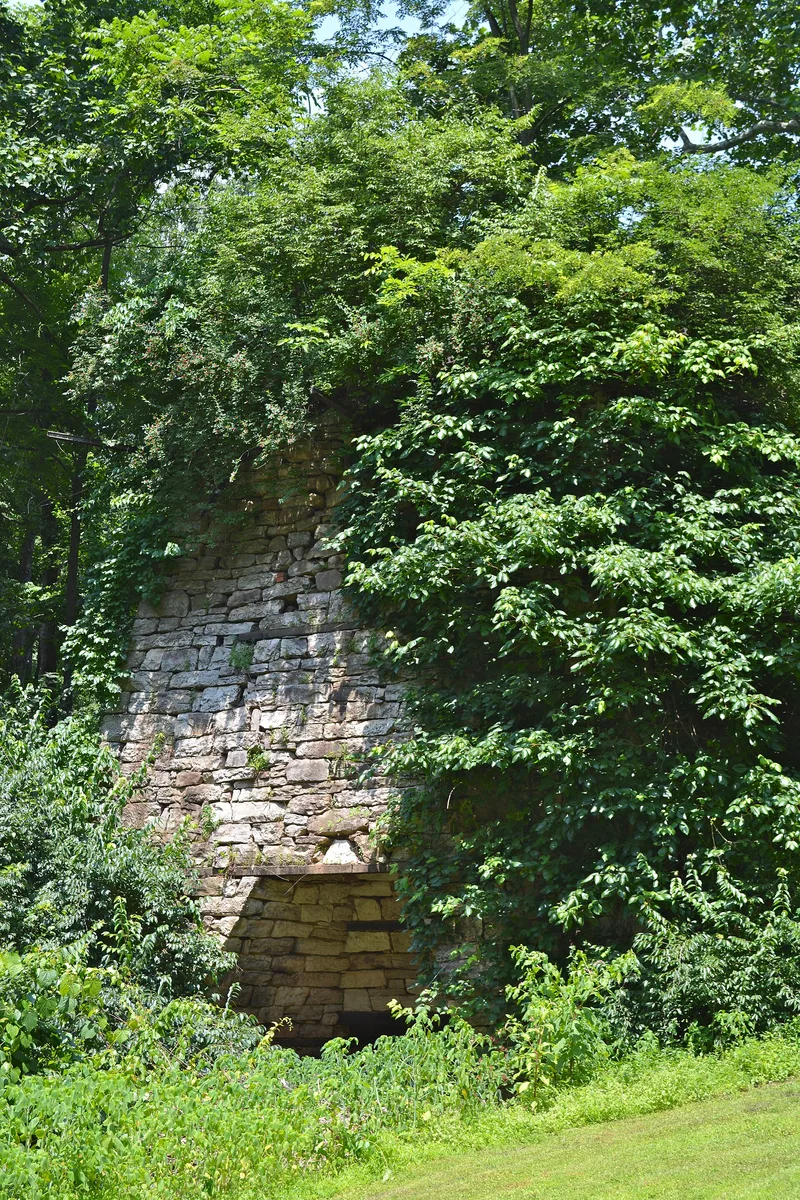
Franklin Furnace is a small iron plantation in the Franklin Furnace area of St. Thomas Township, Franklin County, built around a stone furnace stack dated 1828 and set in the valley of Wilson Run. The stack, about thirty feet square and thirty feet tall, retains its casting and tuyere arches, and a cast iron plate above the casting arch records the builders, Peter and George Housum. The district also includes a manager's house and office from about 1828, four worker's houses along Cinder Street, and the ruins of a barn. The Housums, who came west from Berks County, bought 1,238 acres in 1827. The furnace changed hands several times, and by 1878 it employed seventy-five men and had thirty company houses nearby. Its products included stoves, but local ore proved unsuitable and transport costs made it unprofitable. Operations largely ended by 1882.
Machine-generated summary. This summary was generated by a language model from the official nomination document and has not been reviewed line by line by an editor. It may contain errors. Check the source document before relying on any detail. Source: nomination document (PDF) · catalog entry. Generated October 2026 (model claude-haiku-5-5, prompt v1.1-2026-10-29).
| Period of significance | 1828-1882 |
|---|---|
| Areas of significance | Industry, Engineering, Architecture |
| Acreage | 4 |
| Boundary source | not published |
| Full listing page | Franklin Furnace Historic District (property record) |
What listing means for this property
This is a historic district. Buildings within its boundary are either contributing (they add to the district's significance) or non-contributing. Owners of contributing income-producing buildings can claim the 20% federal rehabilitation tax credit; homeowners should look at state credits. National Register districts impose no design review by themselves; a local historic district ordinance, if one exists, does (the difference explained).
General information, not legal or tax advice. Rules change; confirm with your State Historic Preservation Office or a qualified adviser.