Fonthill, Mercer Museum and Moravian Pottery and Tile Works

Why it's listed
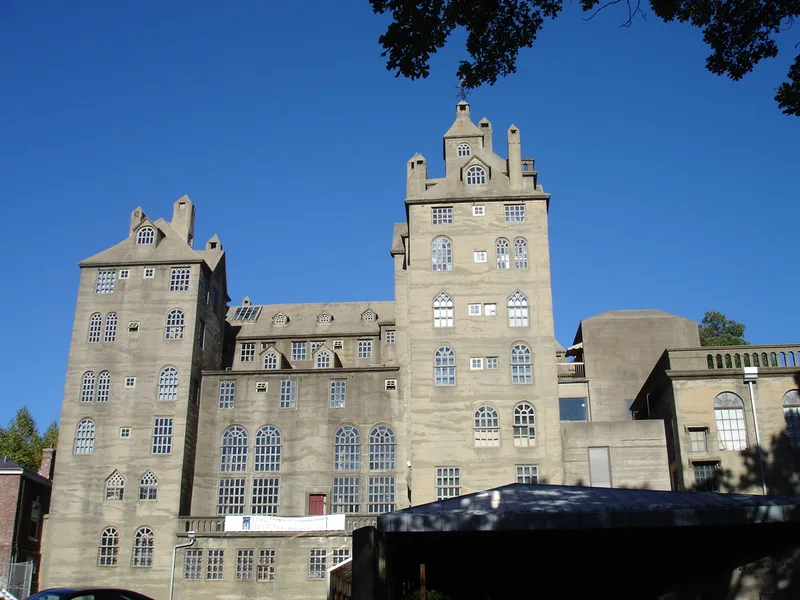
Three reinforced-concrete sites in Doylestown, Pennsylvania, were built by Henry Chapman Mercer between 1907 and 1916: his house Fonthill, the Mercer Museum, and the Moravian Pottery and Tile Works. Fonthill was loosely modelled on medieval castles and was built with hand-mixed concrete and reinforcing iron pipe. The Mercer Museum has over 30,000 artifacts displayed in an open well with a continuous balcony, and it was dedicated on June 17, 1916. The tile works is a U-shaped building with an arcaded courtyard, and it produced handcrafted decorative tiles that Mercer sold widely. Mercer is regarded as one of the first designers to use reinforced concrete in American buildings, and as a collector of early American tools and folk art. The sites are treated together because Mercer conceived them as one body of work.
Machine-generated summary. This summary was generated by a language model from the official nomination document and has not been reviewed line by line by an editor. It may contain errors. Check the source document before relying on any detail. Source: nomination document (PDF) · catalog entry. Generated October 2026 (model claude-haiku-5-5, prompt v1.1-2026-10-29).
| Period of significance | 1907-1916 |
|---|---|
| Areas of significance | Industry, Art, Architecture |
| Boundary source | NPS cultural-resource GIS polygon |
| Full listing page | Fonthill, Mercer Museum and Moravian Pottery and Tile Works (property record) |
What listing means for this property
This is a historic district. Buildings within its boundary are either contributing (they add to the district's significance) or non-contributing. Owners of contributing income-producing buildings can claim the 20% federal rehabilitation tax credit; homeowners should look at state credits. National Register districts impose no design review by themselves; a local historic district ordinance, if one exists, does (the difference explained).
General information, not legal or tax advice. Rules change; confirm with your State Historic Preservation Office or a qualified adviser.