Everett Historic District

Why it's listed
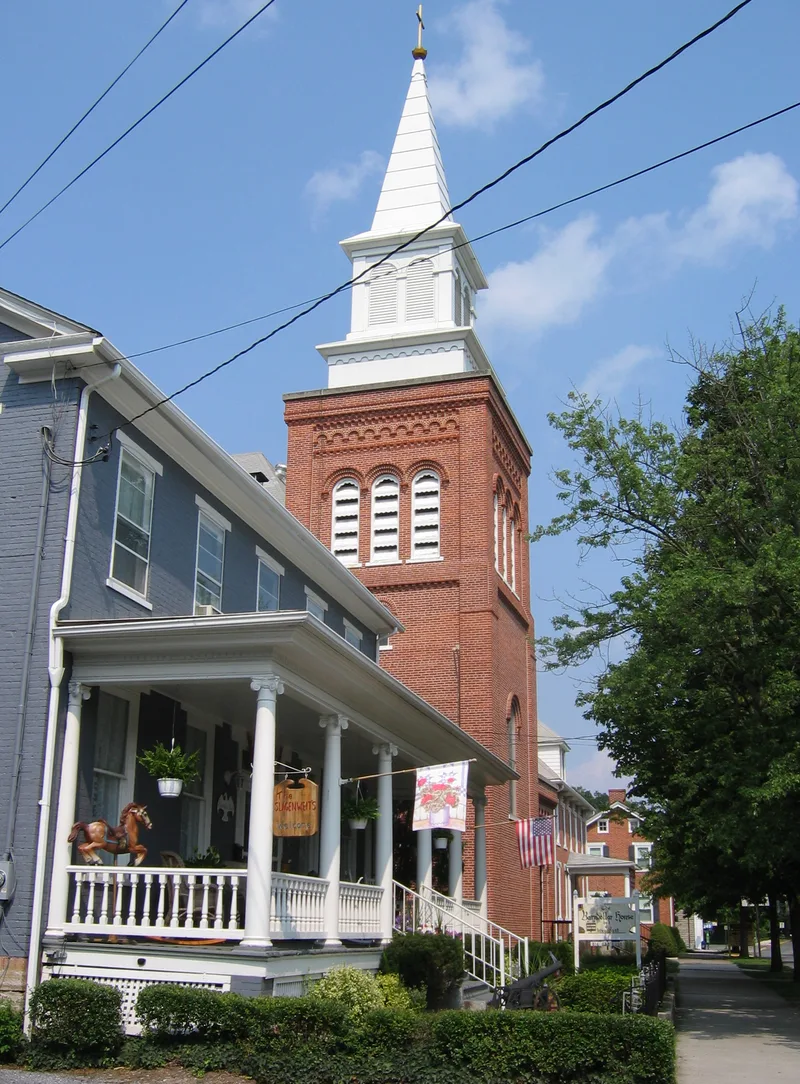
Centered on Main and Spring Streets in Everett, the district holds 362 buildings dating from about 1830 to 1952, of which 300 are contributing. Its core is a compact commercial block of two- and three-story brick and frame buildings, many with covered arcades over the sidewalk. The town grew along the Forbes Road and Pennsylvania Road, and the Lincoln Highway, designated in 1913, later brought garages, restaurants and hotels. Cottage Planing Mill, founded in 1884 by George Harrison Gibboney, produced prefabricated houses whose wood detailing appears throughout the town. The 1938 Georgian Revival post office at 17 East Main Street and the Union Hotel, rebuilt in brick in 1898, are among its notable buildings. Churches, including the Barndollar Methodist Church of 1859, frame the commercial core at its edges.
Machine-generated summary. This summary was generated by a language model from the official nomination document and has not been reviewed line by line by an editor. It may contain errors. Check the source document before relying on any detail. Source: nomination document (PDF) · catalog entry. Generated October 2026 (model claude-haiku-5-5, prompt v1.1-2026-10-29).
| Period of significance | C. 1830 to 1952 |
|---|---|
| Styles | Federal, Gothic Revival, Italianate, Queen Anne, Craftsman, Georgian/Spanish Revivals |
| Areas of significance | Commerce, Transportation, Architecture |
| Acreage | 120 |
| Boundary source | NPS cultural-resource GIS polygon |
| Full listing page | Everett Historic District (property record) |
What listing means for this property
This is a historic district. Buildings within its boundary are either contributing (they add to the district's significance) or non-contributing. Owners of contributing income-producing buildings can claim the 20% federal rehabilitation tax credit; homeowners should look at state credits. National Register districts impose no design review by themselves; a local historic district ordinance, if one exists, does (the difference explained).
General information, not legal or tax advice. Rules change; confirm with your State Historic Preservation Office or a qualified adviser.