Etna Furnace

Why it's listed
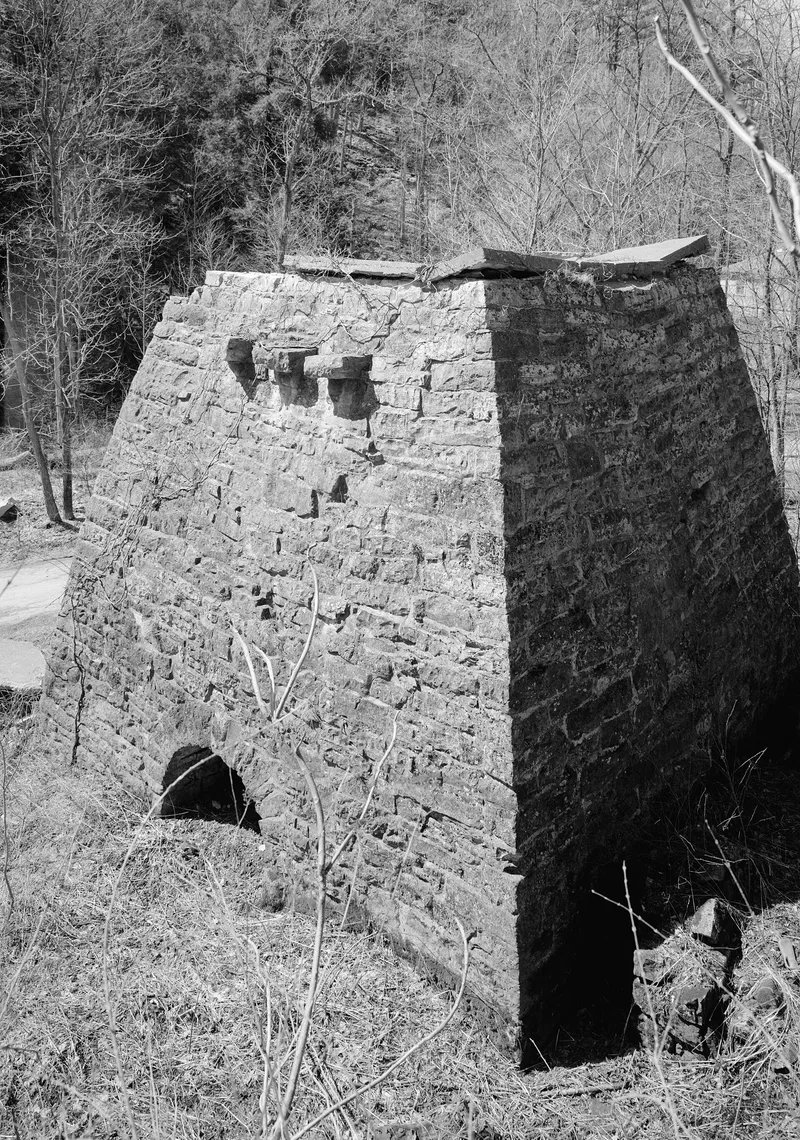
Begun in 1805 on a heavily wooded tract along the upper Juniata River, Etna Furnace was built as more than an iron works. Its founders, Barree Billy Moore, John Canan and James Stewart, formed the Etna Iron Furnace Company and laid out a complete community. Surviving structures include a four-sided stone furnace about 16 feet high, a blacksmith shop, a long three-family tenant house with four chimneys, a stone store and paymaster's office dated 1832, and a horse and mule barn. Several buildings are now reduced to ruins or foundations. The furnace was active until the late nineteenth century, and during the years after the Civil War it produced as much as 100 tons of charcoal iron and 600 tons of bloom iron annually. Its value lies in the variety and number of its remaining buildings, which illustrate how a company-owned ironmaking settlement operated in the mid-nineteenth century.
Machine-generated summary. This summary was generated by a language model from the official nomination document and has not been reviewed line by line by an editor. It may contain errors. Check the source document before relying on any detail. Source: nomination document (PDF) · catalog entry. Generated October 2026 (model claude-haiku-5-5, prompt v1.1-2026-10-29).
| Period of significance | 19th Century |
|---|---|
| Areas of significance | Industry, Commerce |
| Acreage | 150 |
| Boundary source | NPS cultural-resource GIS polygon |
| Full listing page | Etna Furnace (property record) |
What listing means for this property
This is a historic district. Buildings within its boundary are either contributing (they add to the district's significance) or non-contributing. Owners of contributing income-producing buildings can claim the 20% federal rehabilitation tax credit; homeowners should look at state credits. National Register districts impose no design review by themselves; a local historic district ordinance, if one exists, does (the difference explained).
General information, not legal or tax advice. Rules change; confirm with your State Historic Preservation Office or a qualified adviser.