Equinunk Historic District

Why it's listed
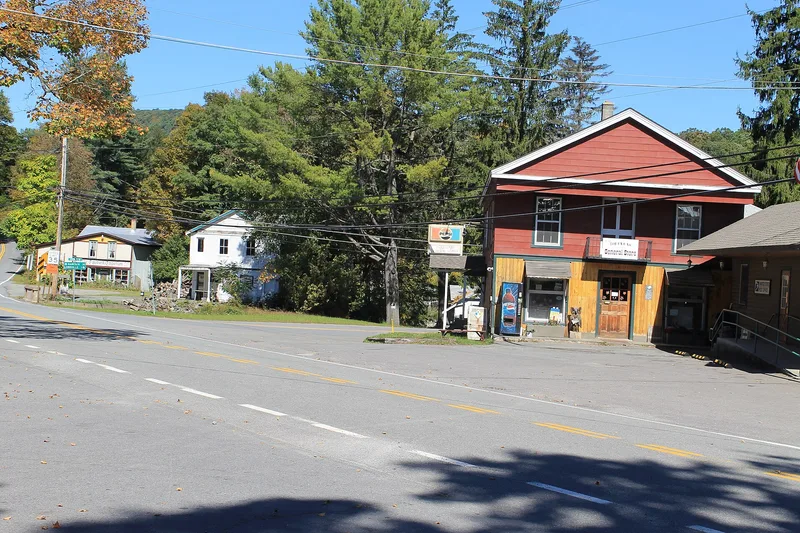
Equinunk is a village of wood-framed houses, commercial buildings and a cemetery set where Equinunk Creek meets the Delaware River in Wayne County, Pennsylvania. Its development began in 1831, when Israel Chapman and Alexander Calder bought land from the Preston family and laid out the village. Through the mid-nineteenth century the community grew around a sawmill, a hemlock-bark tannery begun in 1847, an axe factory, a planing mill, a wood distillation plant and an excelsior factory. Most of those businesses were later destroyed by fire or abandonment, but their associated residences and stores remain. The district includes Second Empire houses built by the Lloyd brothers in 1873 and 1874, a Gothic Revival Methodist church dated 1895, and Bleck's Hotel, a 1905 masonry Craftsman building that reflects the tourism that followed the bridge across the Delaware in 1904. The district is regarded as the largest and most intact group of its kind in the Upper Delaware Valley, with 56 contributing resources against 20 non-contributing ones.
Machine-generated summary. This summary was generated by a language model from the official nomination document and has not been reviewed line by line by an editor. It may contain errors. Check the source document before relying on any detail. Source: nomination document (PDF) · catalog entry. Generated October 2026 (model claude-haiku-5-5, prompt v1.1-2026-10-29).
| Period of significance | 1831-c.1940 |
|---|---|
| Styles | Greek Revival, Gothic Revival, Second Empire, Queen Anne, Italianate, Craftsman |
| Areas of significance | Architecture, Industry |
| Acreage | 50 |
| Boundary source | NPS cultural-resource GIS polygon |
| Full listing page | Equinunk Historic District (property record) |
What listing means for this property
This is a historic district. Buildings within its boundary are either contributing (they add to the district's significance) or non-contributing. Owners of contributing income-producing buildings can claim the 20% federal rehabilitation tax credit; homeowners should look at state credits. National Register districts impose no design review by themselves; a local historic district ordinance, if one exists, does (the difference explained).
General information, not legal or tax advice. Rules change; confirm with your State Historic Preservation Office or a qualified adviser.