Eisenhower National Historic Site

Why it's listed
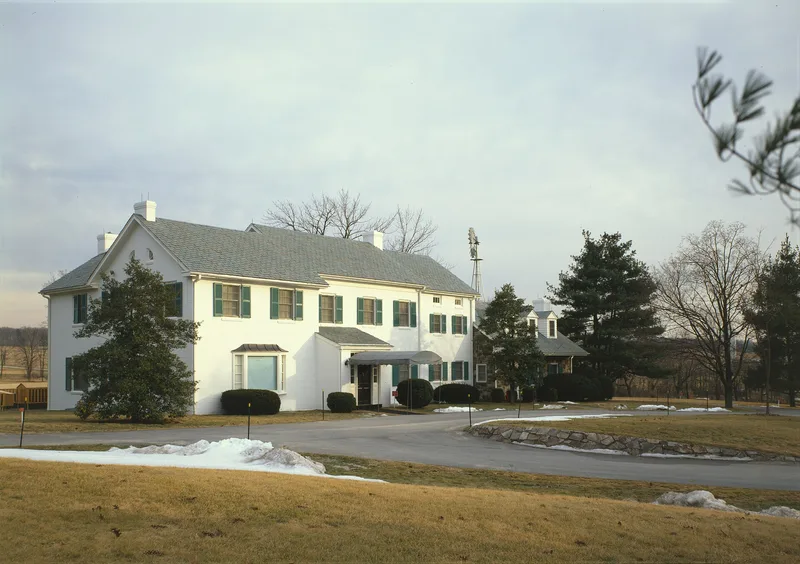
Three adjoining farms in the piedmont of Adams County, Pennsylvania, form the core of this site, with farming on the land continuing since the mid-eighteenth century. The Eisenhowers bought the central farm in 1951 and occupied it through 1969, adding an allee of evergreens and flowering crab trees along a formal entrance drive and installing Secret Service huts and gates for security. Dwight D. Eisenhower, Supreme Commander in Europe and the 34th President, used the farm as a informal retreat, and during his recuperation in 1955 and 1956 he conducted negotiations there with domestic and foreign leaders. The land was also a part of the Battle of Gettysburg in July 1863, when Confederate forces used the farms for artillery parks, headquarters, hospitals and supply routes. The site was transferred to the National Park Service in 1967 and designated a national historic site to recognize both associations.
Machine-generated summary. This summary was generated by a language model from the official nomination document and has not been reviewed line by line by an editor. It may contain errors. Check the source document before relying on any detail. Source: nomination document (PDF) · catalog entry. Generated October 2026 (model claude-haiku-5-5, prompt v1.1-2026-10-29).
| Period of significance | 1951-1969 |
|---|---|
| Styles | Colonial Revival |
| Areas of significance | Military, Politics/Government |
| Acreage | 690.5 |
| Boundary source | NPS cultural-resource GIS polygon |
| Full listing page | Eisenhower National Historic Site (property record) |
What listing means for this property
This is a historic district. Buildings within its boundary are either contributing (they add to the district's significance) or non-contributing. Owners of contributing income-producing buildings can claim the 20% federal rehabilitation tax credit; homeowners should look at state credits. National Register districts impose no design review by themselves; a local historic district ordinance, if one exists, does (the difference explained).
General information, not legal or tax advice. Rules change; confirm with your State Historic Preservation Office or a qualified adviser.