Eden Cemetery
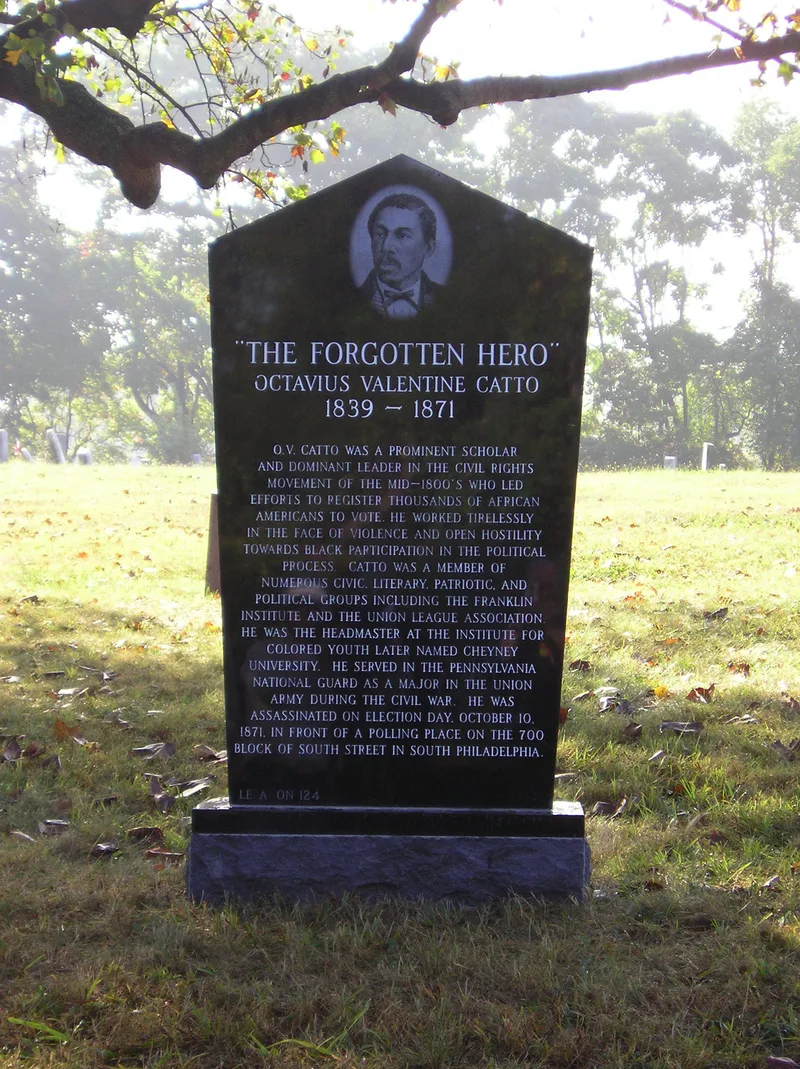

Why it's listed
Eden Cemetery occupies 49 acres in Collingdale Borough, Delaware County, Pennsylvania, and holds more than 90,000 gravesites across twenty-three named sections. The Eden Cemetery Company established it in 1902 as a burial ground for African Americans in the Philadelphia region, at a time when many cemeteries in the area excluded them or set aside segregated plots. Four original sections, Celestine, Lebanon, Home and Olive, were laid out first, and Lebanon and Olive received burials moved from older Philadelphia African American cemeteries. Other sections are named for Frederick Douglass, Abraham Lincoln, Harriet Tubman and Richard Allen. The cemetery's significance lies in its role as a community-owned burial place during segregation and in its continued use by African Americans across the region. The grounds are laid out in a pastoral lawn-park style, and the 1972 administration building is non-contributing.
Machine-generated summary. This summary was generated by a language model from the official nomination document and has not been reviewed line by line by an editor. It may contain errors. Check the source document before relying on any detail. Source: nomination document (PDF) · catalog entry. Generated October 2026 (model claude-haiku-5-5, prompt v1.1-2026-10-29).
| Period of significance | 1902 - 1960 |
|---|---|
| Areas of significance | Black |
| Acreage | 49 |
| Boundary source | NPS cultural-resource GIS polygon |
| Full listing page | Eden Cemetery (property record) |
What listing means for this property
This is a historic district. Buildings within its boundary are either contributing (they add to the district's significance) or non-contributing. Owners of contributing income-producing buildings can claim the 20% federal rehabilitation tax credit; homeowners should look at state credits. National Register districts impose no design review by themselves; a local historic district ordinance, if one exists, does (the difference explained).
General information, not legal or tax advice. Rules change; confirm with your State Historic Preservation Office or a qualified adviser.