Easton Cemetery

Why it's listed
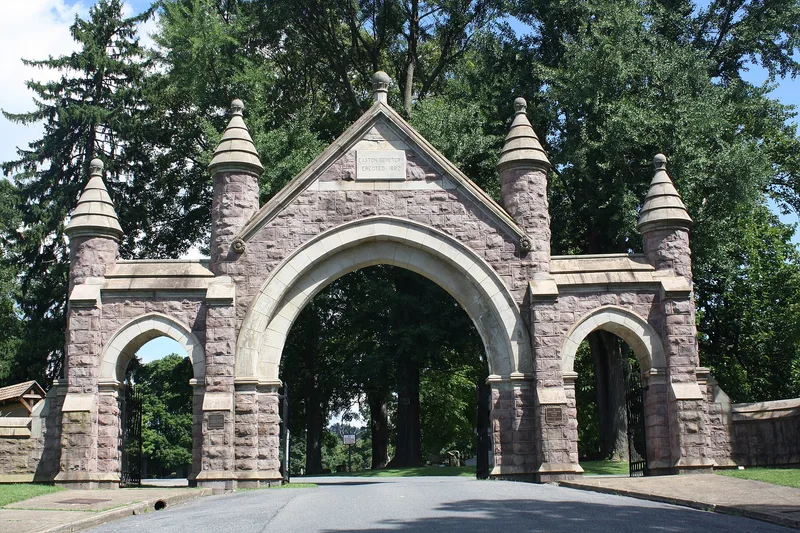
Easton Cemetery occupies about ninety-nine acres on a plateau and hillside beside Bushkill Creek in Easton, Pennsylvania. Incorporated on April 5, 1849, it was laid out by civil engineer James Charles Sidney in a romantic picturesque manner, with winding macadam lanes, limestone gutters and burial sections separated by irregular plots. A New Section, laid out from 1870 by William Sebring, extended the grounds to the west. The cemetery holds family plots of local industrialists and professionals, along with graves of people tied to local, state and national events. Its masonry features include a Greek Revival cemetery vault from the 1850s, a Gothic Revival chapel of about 1875, and a monumental Gothic Revival gateway at Seventh Street, c. 1882. Marble, granite and cast iron monuments and urns survive in quantity. The nomination treats the grounds as an early example of the romantic cemetery movement in the region, with a surviving landscape of trees and funerary art from the 1840s to the 1920s.
Machine-generated summary. This summary was generated by a language model from the official nomination document and has not been reviewed line by line by an editor. It may contain errors. Check the source document before relying on any detail. Source: nomination document (PDF) · catalog entry. Generated October 2026 (model claude-haiku-5-5, prompt v1.1-2026-10-29).
| Period of significance | 1849 - 1940 |
|---|---|
| Styles | Gothic; Greek Revival; Late Victorian |
| Areas of significance | Landscape Architecture, Art |
| Acreage | 58.5 |
| Boundary source | NPS cultural-resource GIS polygon |
| Full listing page | Easton Cemetery (property record) |
What listing means for this property
This is a historic district. Buildings within its boundary are either contributing (they add to the district's significance) or non-contributing. Owners of contributing income-producing buildings can claim the 20% federal rehabilitation tax credit; homeowners should look at state credits. National Register districts impose no design review by themselves; a local historic district ordinance, if one exists, does (the difference explained).
General information, not legal or tax advice. Rules change; confirm with your State Historic Preservation Office or a qualified adviser.