East Washington Historic District

Why it's listed
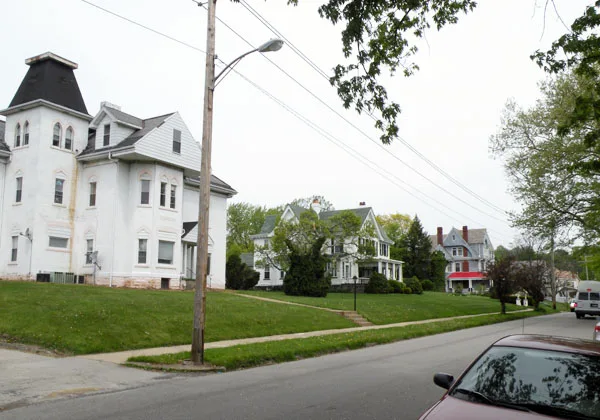
East Washington is a residential borough east of the city of Washington, Pennsylvania, with most of its houses built between 1880 and 1900. Its dwellings range from large houses on spacious lots near the core to smaller, closely spaced homes on side streets. Queen Anne, Shingle Style, Colonial Revival and Victorian Vernacular types predominate, with towers, turrets, spindled and jigsawn porches, Palladian windows and inset balconies common throughout. Notable examples include a brick Italian villa at 63 South Wade, a Shingle Style house at 355 Wheeling Street, and a row of detached houses on North Avenue. The district was built without a master plan or single developer, and it grew from the growth of glass manufacturing, oil and gas, and later steel in the region. It was incorporated as a borough in 1892. Its high proportion of intact buildings from this period, and the variety of styles within a small area, are the reasons for its listing.
Machine-generated summary. This summary was generated by a language model from the official nomination document and has not been reviewed line by line by an editor. It may contain errors. Check the source document before relying on any detail. Source: nomination document (PDF) · catalog entry. Generated October 2026 (model claude-haiku-5-5, prompt v1.1-2026-10-29).
| Period of significance | 1875-1900 |
|---|---|
| Styles | Queen Anne, Shingle Style, Colonial Revival, Victorian Vernacular |
| Areas of significance | Architecture |
| Acreage | 36.5 |
| Boundary source | NPS cultural-resource GIS polygon |
| Full listing page | East Washington Historic District (property record) |
What listing means for this property
This is a historic district. Buildings within its boundary are either contributing (they add to the district's significance) or non-contributing. Owners of contributing income-producing buildings can claim the 20% federal rehabilitation tax credit; homeowners should look at state credits. National Register districts impose no design review by themselves; a local historic district ordinance, if one exists, does (the difference explained).
General information, not legal or tax advice. Rules change; confirm with your State Historic Preservation Office or a qualified adviser.