Eagles Mere Historic District

Why it's listed
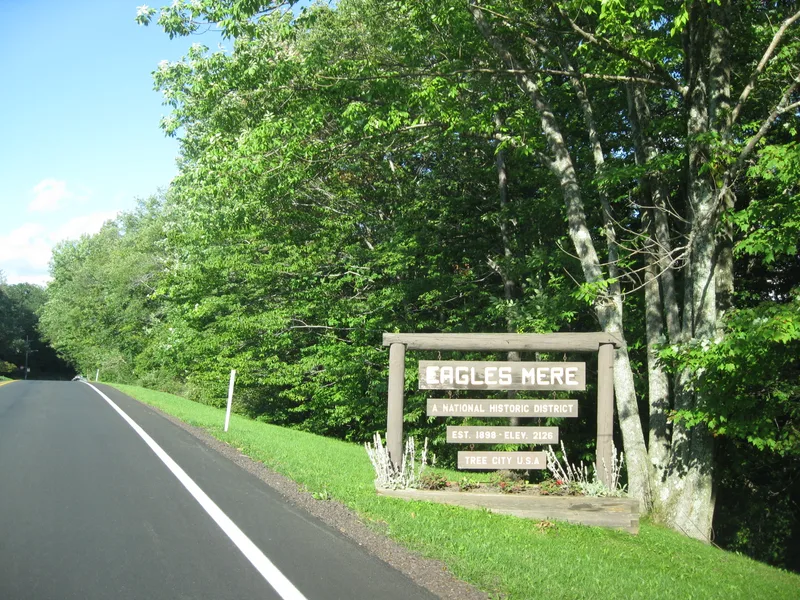
Eagles Mere is a resort community of cottages, boat houses and churches grouped around a spring-fed lake 2,100 feet above sea level in the Allegheny Mountains of Sullivan County. Development began in 1877 when lots south of the lake were sold, and the 1885 purchase of the lake by a syndicate led to the building of hotels and the Eagles Mere Railway. At its height, five large hotels could accommodate more than 1,100 guests, and the hotels employed about one thousand staff each summer. Only the cottages survive from that era. Many of the district's cottages are fine examples of the Shingle, Queen Anne and Craftsman styles, and the community is regarded as one of Pennsylvania's best preserved turn-of-the-century resort communities. Its lakeside covenants, which kept trees and construction back from the shoreline, are cited as an early conservation effort. The lake, beach and wooded shoreline remain largely unchanged.
Machine-generated summary. This summary was generated by a language model from the official nomination document and has not been reviewed line by line by an editor. It may contain errors. Check the source document before relying on any detail. Source: nomination document (PDF) · catalog entry. Generated October 2026 (model claude-haiku-5-5, prompt v1.1-2026-10-29).
| Period of significance | 1877-1945 |
|---|---|
| Styles | Shingle Style, Queen Anne, Bungalow/Craftsman, Prairie School |
| Areas of significance | Architecture, Entertainment/Recreation, Conservation |
| Acreage | 570 |
| Boundary source | NPS cultural-resource GIS polygon |
| Full listing page | Eagles Mere Historic District (property record) |
What listing means for this property
This is a historic district. Buildings within its boundary are either contributing (they add to the district's significance) or non-contributing. Owners of contributing income-producing buildings can claim the 20% federal rehabilitation tax credit; homeowners should look at state credits. National Register districts impose no design review by themselves; a local historic district ordinance, if one exists, does (the difference explained).
General information, not legal or tax advice. Rules change; confirm with your State Historic Preservation Office or a qualified adviser.