Dropsie University Complex

The National Park Service has not published a boundary polygon for this district; the map shows the listed properties inside it and the district's reference point.
Why it's listed
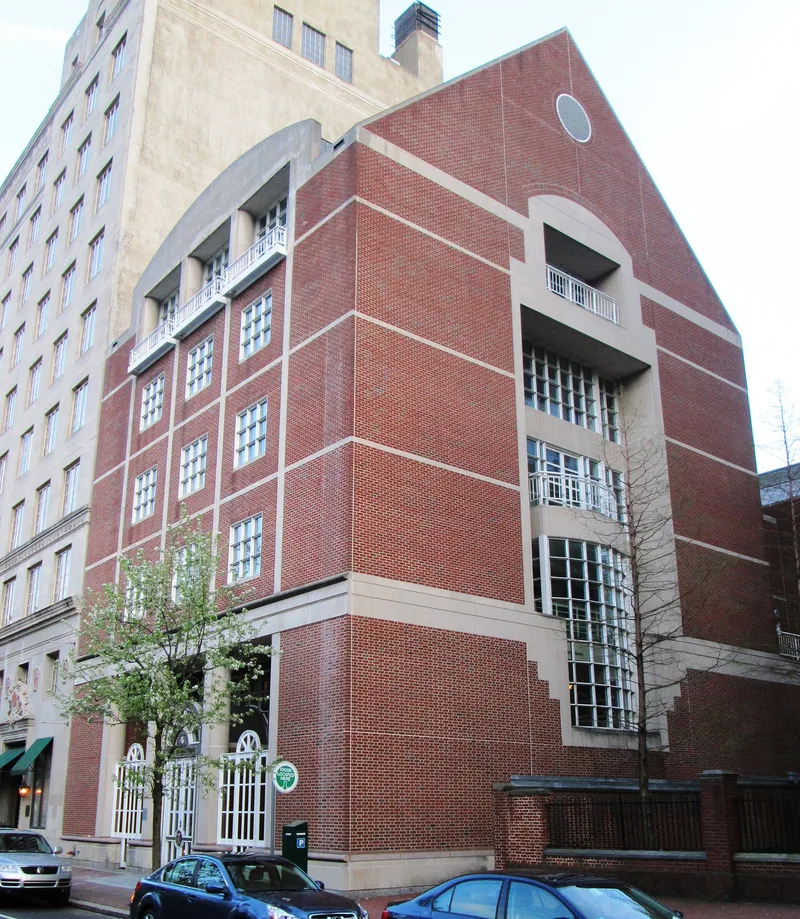
Built in the early twentieth century in North Philadelphia, the Dropsie University complex on Broad Street combines a two-story main building of steel and limestone with a 1909 annex, enlarged in 1914, and the Mikveh Israel Synagogue, also designed by Lewis F. Pilcher and W.G. Tachau. The main building has seven high semicircular openings on its front, Corinthian keystones and paired Greek columns, and a balustraded parapet. The annex first housed Gratz College, which trained secondary school teachers of Hebrew; Gratz relocated in 1951 and the building was then acquired by Dropsie. Dropsie was founded through the 1907 will of Moses Aaron Dropsie and opened in 1909 as a postgraduate institution devoted to Jewish and related studies. Its library holds Cairo Genizah fragments, cuneiform tablets and Assyrian seals, and graduates include Eleazar Sukenik, who discovered the Dead Sea Scrolls. The complex is regarded as a fine example of Beaux Arts and Renaissance Revival design in early twentieth-century Philadelphia.
Machine-generated summary. This summary was generated by a language model from the official nomination document and has not been reviewed line by line by an editor. It may contain errors. Check the source document before relying on any detail. Source: nomination document (PDF) · catalog entry. Generated October 2026 (model claude-haiku-5-5, prompt v1.1-2026-10-29).
| Period of significance | 1909-1914 |
|---|---|
| Styles | Beaux Arts Classical; Renaissance Revival |
| Areas of significance | Education, Architecture, Religion |
| Acreage | 2 |
| Boundary source | not published |
| Full listing page | Dropsie University Complex (property record) |
What listing means for this property
This is a historic district. Buildings within its boundary are either contributing (they add to the district's significance) or non-contributing. Owners of contributing income-producing buildings can claim the 20% federal rehabilitation tax credit; homeowners should look at state credits. National Register districts impose no design review by themselves; a local historic district ordinance, if one exists, does (the difference explained).
General information, not legal or tax advice. Rules change; confirm with your State Historic Preservation Office or a qualified adviser.