Dolington Village Historic District

Why it's listed
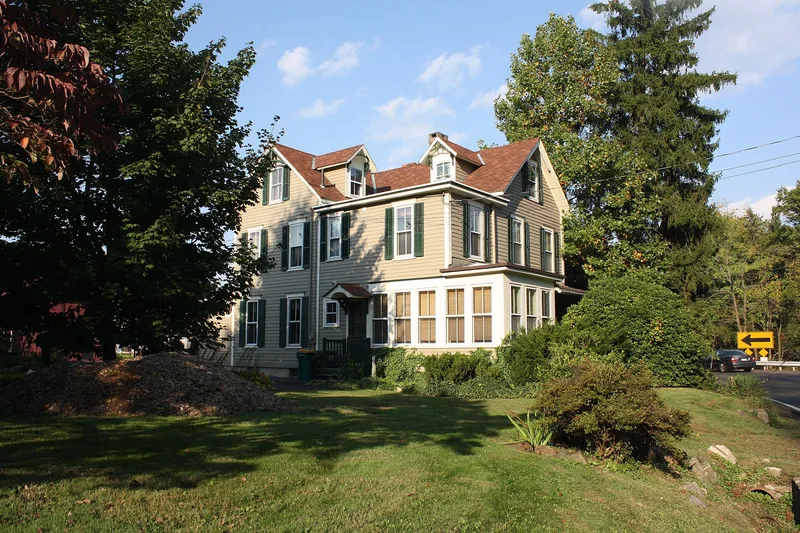
Dolington is a rural village of roughly 94 resources in Upper Makefield Township, Bucks County, sitting on a slight rise where Mt. Eyre Road meets Route 532 in a T-shaped junction. Peter Dolin, the first settler, gave the village its name. Blacksmith Whitson Canby began selling lots in 1791, and by 1804 the village had about 23 houses. Most of its primary buildings were built between 1800 and 1875, mainly frame or stone, and typically three or four bays wide. The village grew into a service centre for surrounding farms, with blacksmiths, wheelwrights, coachmakers and harnessmakers. James Briggs and Oliver P. Ely ran a large coach and wagon factory. Growth slowed after the 1800s, leaving a cohesive group of vernacular Federal houses. The Balderston Slaughterhouse complex, with about a dozen frame outbuildings, adds an agrarian dimension. The district is listed for its architecture and its commercial history.
Machine-generated summary. This summary was generated by a language model from the official nomination document and has not been reviewed line by line by an editor. It may contain errors. Check the source document before relying on any detail. Source: nomination document (PDF) · catalog entry. Generated October 2026 (model claude-haiku-5-5, prompt v1.1-2026-10-29).
| Period of significance | 1790-1930 |
|---|---|
| Styles | Early Republican/Federal; vernacular Federal; Late Victorian/Gothic Revival |
| Areas of significance | Commerce, Architecture |
| Acreage | 36 |
| Boundary source | NPS cultural-resource GIS polygon |
| Full listing page | Dolington Village Historic District (property record) |
What listing means for this property
This is a historic district. Buildings within its boundary are either contributing (they add to the district's significance) or non-contributing. Owners of contributing income-producing buildings can claim the 20% federal rehabilitation tax credit; homeowners should look at state credits. National Register districts impose no design review by themselves; a local historic district ordinance, if one exists, does (the difference explained).
General information, not legal or tax advice. Rules change; confirm with your State Historic Preservation Office or a qualified adviser.