Doe Run Village Historic District

Why it's listed
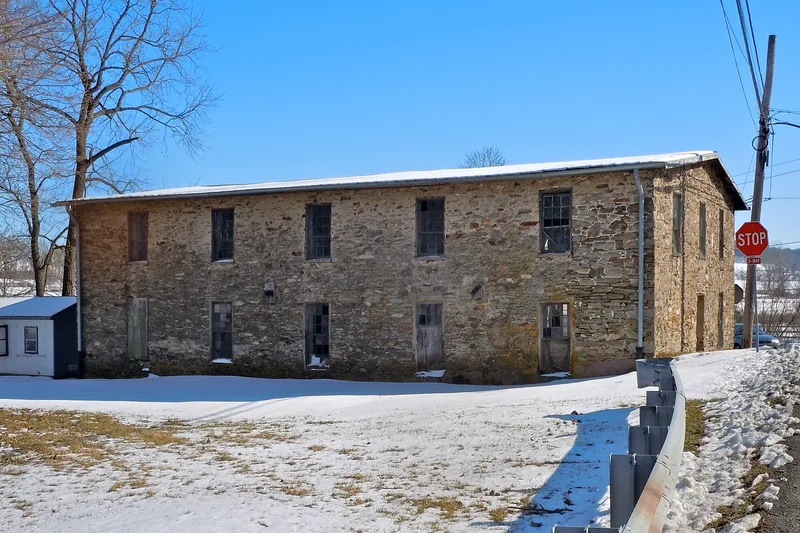
Doe Run is a small rural village in the Doe Run valley of West Marlborough Township, Chester County, set among pasture, meadow and rolling hills that have remained largely free of later development. Its buildings, about 29 principal structures in frame, brick and stone, were built mostly between the late 18th and early 20th centuries and spread across three clusters along Route 82, Highland Dairy Road and Springdell Road. The village served as a self-contained community and trading centre for surrounding farms, with a general store, inn, post office, school, church and mills powered by Doe Run Creek. Among its notable institutions was the Mutual Fire Insurance Company of Chester County, organized at Doe Run in 1840. The district is regarded as important for its commercial and agricultural history, and for the way its built environment and natural setting still convey that role.
Machine-generated summary. This summary was generated by a language model from the official nomination document and has not been reviewed line by line by an editor. It may contain errors. Check the source document before relying on any detail. Source: nomination document (PDF) · catalog entry. Generated October 2026 (model claude-haiku-5-5, prompt v1.1-2026-10-29).
| Period of significance | 1800-1899 |
|---|---|
| Areas of significance | Industry, Commerce, Agriculture |
| Acreage | 850 |
| Boundary source | NPS cultural-resource GIS polygon |
| Full listing page | Doe Run Village Historic District (property record) |
What listing means for this property
This is a historic district. Buildings within its boundary are either contributing (they add to the district's significance) or non-contributing. Owners of contributing income-producing buildings can claim the 20% federal rehabilitation tax credit; homeowners should look at state credits. National Register districts impose no design review by themselves; a local historic district ordinance, if one exists, does (the difference explained).
Noted as vacant in the nomination. Nomination documents can be decades old; current status may differ. If you are considering buying an empty listed property, read the due-diligence checklist.
General information, not legal or tax advice. Rules change; confirm with your State Historic Preservation Office or a qualified adviser.