Delaware, Lackawanna and Western Railroad Yard-Dickson Manufacturing Co. Site

Why it's listed
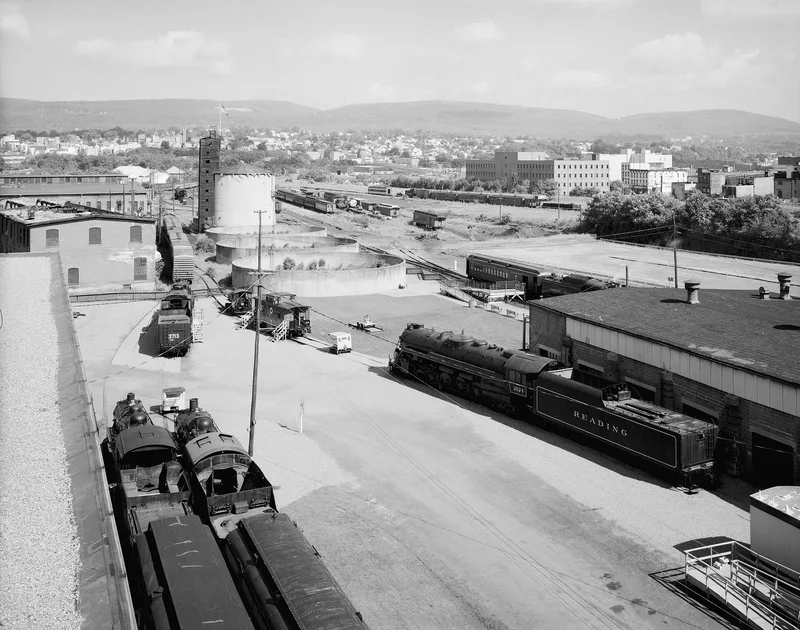
Scranton's Delaware, Lackawanna and Western Railroad yard, on the edge of downtown, became the railroad's central steam locomotive overhaul facility after William Truesdale became president in 1899. Truesdale acquired twenty-three acres of the abandoned Lackawanna Iron and Steel Company east of Washington Avenue and replaced most nineteenth-century structures with larger shops. Frank J. Niles designed several buildings erected between 1907 and 1909, including the five-story brick Pattern Shop and the 120-by-400-foot Foundry, which was built with a steel frame and brick cladding. Nearby, the Dickson Manufacturing Company's Cliff Street works, rebuilt after an 1875 fire, assembled steam locomotives until American Locomotive Company closed the shop in 1908. The yard and the former Dickson site are significant for their role in railroad transportation and industry in the period from 1899 to 1939. Little of the Dickson complex survives beyond one building, and the yard's freight transfer buildings are gone.
Machine-generated summary. This summary was generated by a language model from the official nomination document and has not been reviewed line by line by an editor. It may contain errors. Check the source document before relying on any detail. Source: nomination document (PDF) · catalog entry. Generated October 2026 (model claude-haiku-5-5, prompt v1.1-2026-10-29).
| Period of significance | 1899-1939 |
|---|---|
| Styles | utilitarian |
| Areas of significance | Transportation, Industry |
| Acreage | 78 |
| Boundary source | NPS cultural-resource GIS polygon |
| Full listing page | Delaware, Lackawanna and Western Railroad Yard-Dickson Manufacturing Co. Site (property record) |
What listing means for this property
This is a historic district. Buildings within its boundary are either contributing (they add to the district's significance) or non-contributing. Owners of contributing income-producing buildings can claim the 20% federal rehabilitation tax credit; homeowners should look at state credits. National Register districts impose no design review by themselves; a local historic district ordinance, if one exists, does (the difference explained).
General information, not legal or tax advice. Rules change; confirm with your State Historic Preservation Office or a qualified adviser.