Danville Historic District

Why it's listed
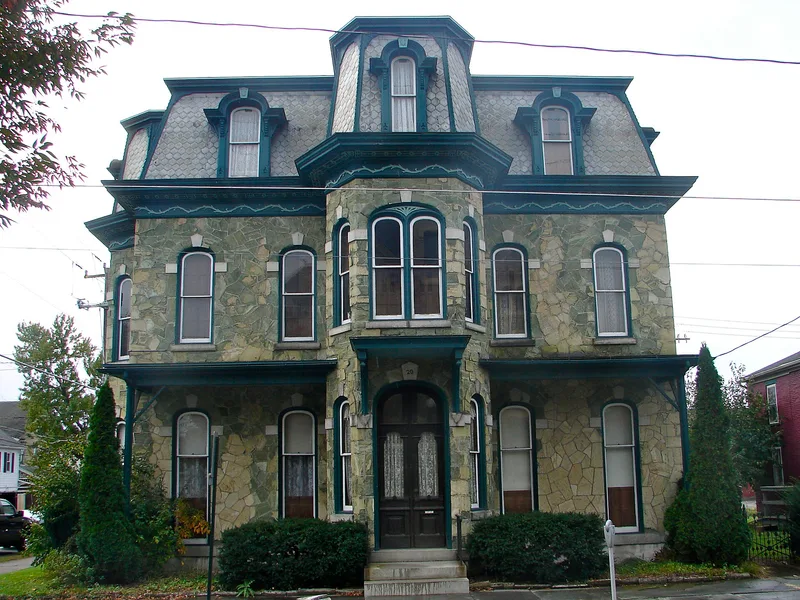
Danville sits on the North Branch of the Susquehanna River at the foot of Montour Ridge, a river town laid out on a grid around Mill, Market and Bloom streets. William Montgomery, born in Chester County in 1736, settled the site in 1776 and built the first woolen, saw and grist mill there. His son Daniel laid out the town in 1792. Iron manufacturing grew from the 1830s, and the Montour Iron Works rolling mill produced the first American T-rail in 1845. Danville became county seat of Montour County in 1850, and its population reached 3,300 by 1850. The district holds Federal houses from the 1790s, Greek Revival churches including the Mahoning Presbyterian Church of 1853, and dense brick commercial blocks on Mill Street with cast iron storefronts and pressed metal facades. Its houses reflect the wealth produced by the iron and foundry industries, and the Thomas Beaver Free Library and YMCA of 1886 recall one of the town's major philanthropists.
Machine-generated summary. This summary was generated by a language model from the official nomination document and has not been reviewed line by line by an editor. It may contain errors. Check the source document before relying on any detail. Source: nomination document (PDF) · catalog entry. Generated October 2026 (model claude-haiku-5-5, prompt v1.1-2026-10-29).
| Period of significance | 1792 - 1943 |
|---|---|
| Styles | Italianate, Federal, Greek Revival, Gothic Revival, Second Empire, Queen Anne and Colonial Revival |
| Areas of significance | Architecture, Commerce, Industry, Politics/Government |
| Acreage | 77.2 |
| Boundary source | NPS cultural-resource GIS polygon |
| Full listing page | Danville Historic District (property record) |
What listing means for this property
This is a historic district. Buildings within its boundary are either contributing (they add to the district's significance) or non-contributing. Owners of contributing income-producing buildings can claim the 20% federal rehabilitation tax credit; homeowners should look at state credits. National Register districts impose no design review by themselves; a local historic district ordinance, if one exists, does (the difference explained).
General information, not legal or tax advice. Rules change; confirm with your State Historic Preservation Office or a qualified adviser.