Cuttalossa Valley Historic District

Why it's listed
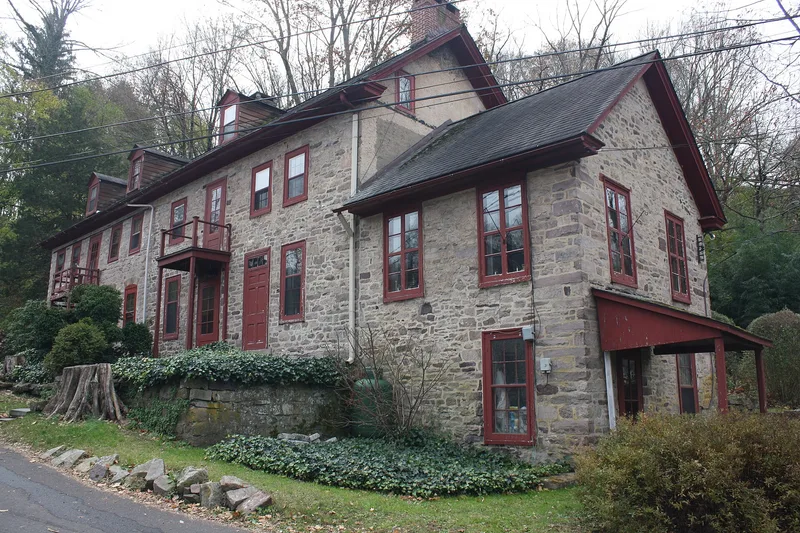
Along a narrow stretch of Cuttalossa Creek in Solebury Township, Bucks County, the district contains dwellings, barns, a mill, bridges and the remains of mills and raceways dating from the mid-18th century to 1932. Samuel Armitage built the first mill on the creek around 1748, and the stone Armitage Mill still stands. In the 1830s John E. Kenderdine bought the tavern and mills at the creek's mouth and built a lumber business that gave the village its name, Lumberton. Kenderdine's enterprises included a sawmill, a sash and door factory from 1857, and a grist and plaster mill on the canal. Stone from nearby quarries was shipped to Philadelphia and New York. Floods in 1885 and 1896 ended the valley's milling. Later the valley drew painters and tourists, and the artist Daniel Garber is associated with the district. Its stone and frame buildings are regarded as typical of local vernacular design.
Machine-generated summary. This summary was generated by a language model from the official nomination document and has not been reviewed line by line by an editor. It may contain errors. Check the source document before relying on any detail. Source: nomination document (PDF) · catalog entry. Generated October 2026 (model claude-haiku-5-5, prompt v1.1-2026-10-29).
| Period of significance | 1748-1952 |
|---|---|
| Styles | Colonial: Georgian; Early Republic: Federal; Mid 19th Century: Greek Revival; Mid 19th Century: Italianate |
| Areas of significance | Industry, Architecture, Art, Entertainment/Recreation |
| Acreage | 90 |
| Boundary source | NPS cultural-resource GIS polygon |
| Full listing page | Cuttalossa Valley Historic District (property record) |
What listing means for this property
This is a historic district. Buildings within its boundary are either contributing (they add to the district's significance) or non-contributing. Owners of contributing income-producing buildings can claim the 20% federal rehabilitation tax credit; homeowners should look at state credits. National Register districts impose no design review by themselves; a local historic district ordinance, if one exists, does (the difference explained).
General information, not legal or tax advice. Rules change; confirm with your State Historic Preservation Office or a qualified adviser.