Compton and Bloomfield

Why it's listed
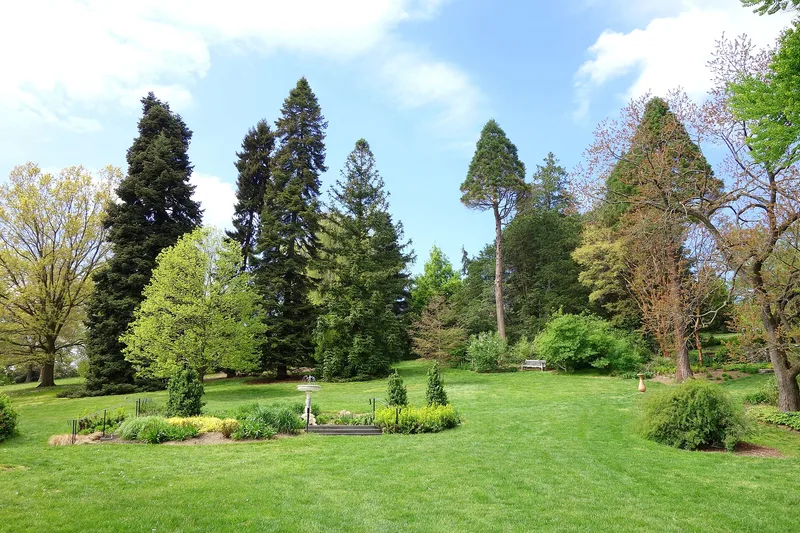
Set on the hills of Chestnut Hill at the northwestern edge of Philadelphia, this former estate was begun in 1887 when John T. Morris and his sister Lydia T. Morris acquired land and commissioned Theophilus Parsons Chandler to design the greystone mansion Compton. Morris, who retired from the family iron works in 1891, turned his attention to an arboretum that grew into a landscape of specimen trees, theme gardens, pools and garden architecture. The Morrises willed the property to the University of Pennsylvania, which has administered its 180 acres since. The grounds include a carriage house-stable by Chandler from 1906, a gardener's cottage by Cope and Stewardson from 1904, and the David W. Pepper house, now Gates Hall, by Wilson Eyre, Jr. Its garden structures, among them a tholos by the Swan Pond and a Mercury Temple of 1913, draw on English models. The property is regarded as an important example of an old Philadelphia family's estate, with buildings that span the 18th to 20th centuries.
Machine-generated summary. This summary was generated by a language model from the official nomination document and has not been reviewed line by line by an editor. It may contain errors. Check the source document before relying on any detail. Source: nomination document (PDF) · catalog entry. Generated October 2026 (model claude-haiku-5-5, prompt v1.1-2026-10-29).
| Period of significance | 1887-1906 |
|---|---|
| Areas of significance | Landscape Architecture, Education, Architecture |
| Acreage | 175 |
| Boundary source | NPS cultural-resource GIS polygon |
| Full listing page | Compton and Bloomfield (property record) |
What listing means for this property
This is a historic district. Buildings within its boundary are either contributing (they add to the district's significance) or non-contributing. Owners of contributing income-producing buildings can claim the 20% federal rehabilitation tax credit; homeowners should look at state credits. National Register districts impose no design review by themselves; a local historic district ordinance, if one exists, does (the difference explained).
General information, not legal or tax advice. Rules change; confirm with your State Historic Preservation Office or a qualified adviser.