Commodore Historic District

Why it's listed
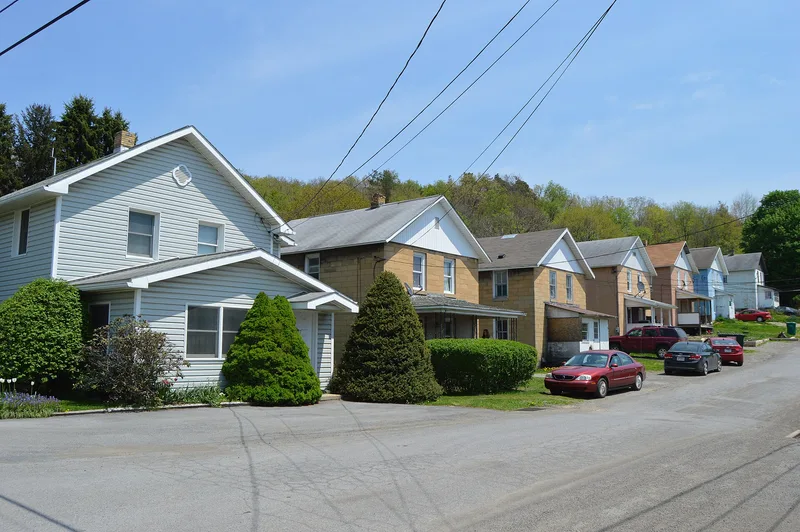
Commodore is a coal company town in Green Township, Indiana County, Pennsylvania, planned and built in 1919-20 by the Clearfield Bituminous Coal Corporation, a subsidiary of the New York Central Railroad, to supply coal for the railroad's locomotives. Company engineer Paul Gill laid out the town, which was named for Commodore Cornelius Vanderbilt. Most of the houses are uniform, two-bay buildings of buff concrete block made on site, with eighteen brick houses for mine foremen and a few larger houses for bosses. The former company store, bank, doctor's office, school and machine shop also survive. The town had water and sewage systems, electricity and indoor plumbing, which were uncommon in coal patches of the period. Most mine buildings are gone, but the street pattern, housing and setting remain largely intact. The district is significant for its industrial history, its company-town planning and its unusual concrete block architecture, which sets it apart from other coal communities in the region.
Machine-generated summary. This summary was generated by a language model from the official nomination document and has not been reviewed line by line by an editor. It may contain errors. Check the source document before relying on any detail. Source: nomination document (PDF) · catalog entry. Generated October 2026 (model claude-sonnet-5-5, prompt v1.0-2026-10-29).
| Period of significance | 1919-1943 |
|---|---|
| Styles | No Style |
| Areas of significance | Industry, Community Planning and Development, Architecture |
| Acreage | 36 |
| Boundary source | NPS cultural-resource GIS polygon |
| Full listing page | Commodore Historic District (property record) |
What listing means for this property
This is a historic district. Buildings within its boundary are either contributing (they add to the district's significance) or non-contributing. Owners of contributing income-producing buildings can claim the 20% federal rehabilitation tax credit; homeowners should look at state credits. National Register districts impose no design review by themselves; a local historic district ordinance, if one exists, does (the difference explained).
General information, not legal or tax advice. Rules change; confirm with your State Historic Preservation Office or a qualified adviser.