Codorus Forge and Furnace Historic District

The National Park Service has not published a boundary polygon for this district; the map shows the listed properties inside it and the district's reference point.
Why it's listed
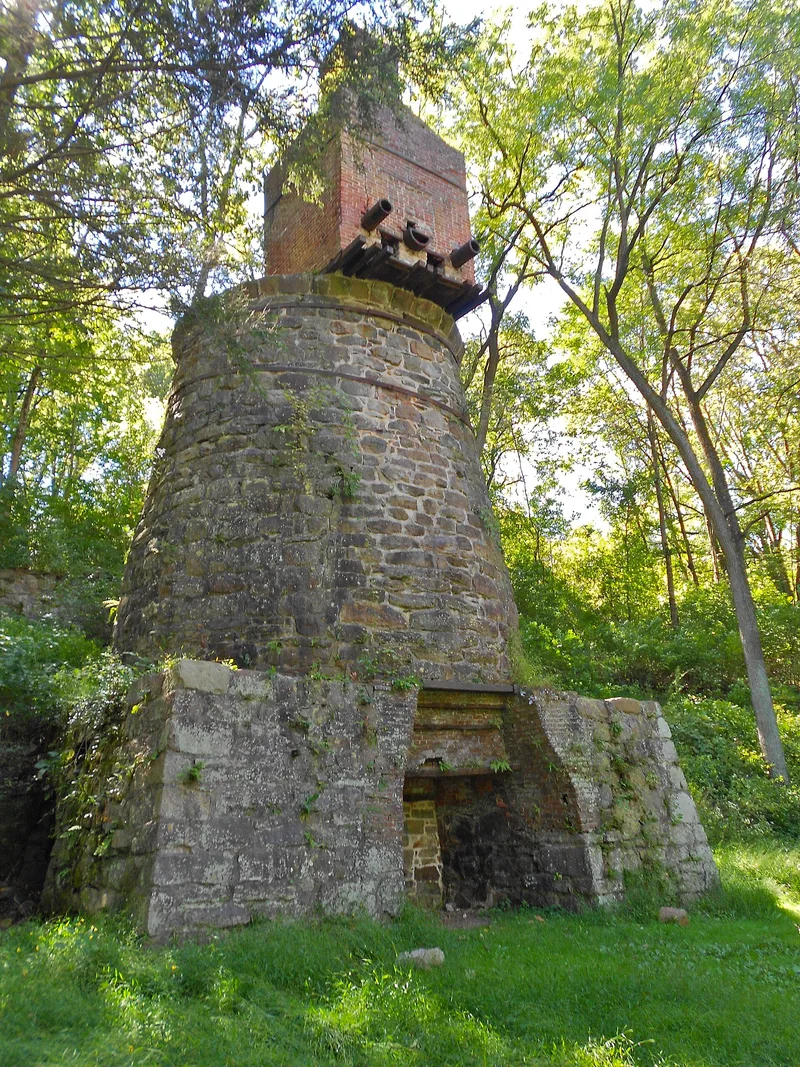
Along the south bank of Codorus Creek in Hellam Township, York County, lies an iron plantation whose origins go back to 1765, when William Bennett built Hellam Forge. Henry Grubb bought the property in 1810, renamed it Codorus Forge, and had a furnace built a short distance away in 1836. The furnace is roughly 30 feet tall, with a square stone base rising about 12 feet before becoming round and tapering upward, and it retains an iron-banded top and a brick hot blast stove with some original piping. The ironmaster's house, a stuccoed stone structure from about 1780, is nine bays wide and is regarded as a well-preserved example of vernacular architecture. The forge building measures 58 by 45 feet, with masonry walls and arched openings. The nomination considers the round furnace unusual, the forge a rare survivor of its type, and the site a source of information about iron production. The furnace stopped operating by 1850.
Machine-generated summary. This summary was generated by a language model from the official nomination document and has not been reviewed line by line by an editor. It may contain errors. Check the source document before relying on any detail. Source: nomination document (PDF) · catalog entry. Generated October 2026 (model claude-haiku-5-5, prompt v1.1-2026-10-29).
| Period of significance | 1765-1850 |
|---|---|
| Areas of significance | Industry, Historic - Non-Aboriginal, Engineering, Architecture |
| Acreage | 7 |
| Boundary source | not published |
| Full listing page | Codorus Forge and Furnace Historic District (property record) |
What listing means for this property
This is a historic district. Buildings within its boundary are either contributing (they add to the district's significance) or non-contributing. Owners of contributing income-producing buildings can claim the 20% federal rehabilitation tax credit; homeowners should look at state credits. National Register districts impose no design review by themselves; a local historic district ordinance, if one exists, does (the difference explained).
General information, not legal or tax advice. Rules change; confirm with your State Historic Preservation Office or a qualified adviser.