Church Farm School Historic District

Why it's listed
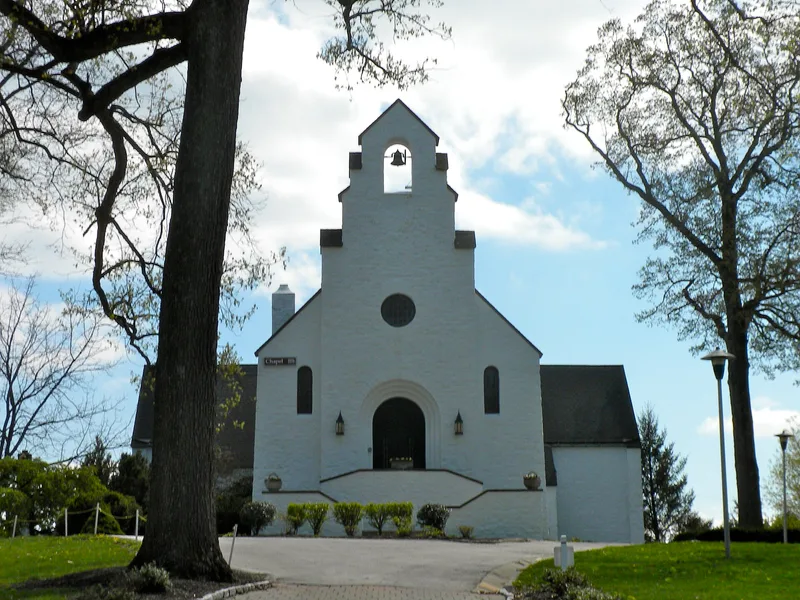
Along the Lincoln Highway in the Great Valley of West Whiteland Township, Chester County, the Church Farm School campus was laid out in 1918 by Philadelphia architect Milton Medary to a cruciform plan. Its whitewashed stone buildings share cypress shingle roofs, flared eaves and rounded window openings. Greystock Hall, the administration building, anchors the north side, while cottages, an infirmary and the Director's House cluster around a park to the south. The chapel, Church of the Atonement, stands on a rise at the head of the complex and was regarded as one of Medary's finest works. The school was founded in 1918 to educate fatherless boys aged 11 to 20 through academics, agriculture and the trades. Its cottages with private sleeping cubicles were considered innovative. The district is significant for its architecture and for its association with founder Dr. Charles W. Shreiner, who engaged Medary to design the campus.
Machine-generated summary. This summary was generated by a language model from the official nomination document and has not been reviewed line by line by an editor. It may contain errors. Check the source document before relying on any detail. Source: nomination document (PDF) · catalog entry. Generated October 2026 (model claude-haiku-5-5, prompt v1.1-2026-10-29).
| Period of significance | 1918-1932 |
|---|---|
| Styles | Tudor Revival or Collegiate Gothic |
| Areas of significance | Education, Architecture |
| Acreage | 19.7 |
| Boundary source | NPS cultural-resource GIS polygon |
| Full listing page | Church Farm School Historic District (property record) |
What listing means for this property
This is a historic district. Buildings within its boundary are either contributing (they add to the district's significance) or non-contributing. Owners of contributing income-producing buildings can claim the 20% federal rehabilitation tax credit; homeowners should look at state credits. National Register districts impose no design review by themselves; a local historic district ordinance, if one exists, does (the difference explained).
General information, not legal or tax advice. Rules change; confirm with your State Historic Preservation Office or a qualified adviser.