Cheyney, Squire, Farm

Why it's listed
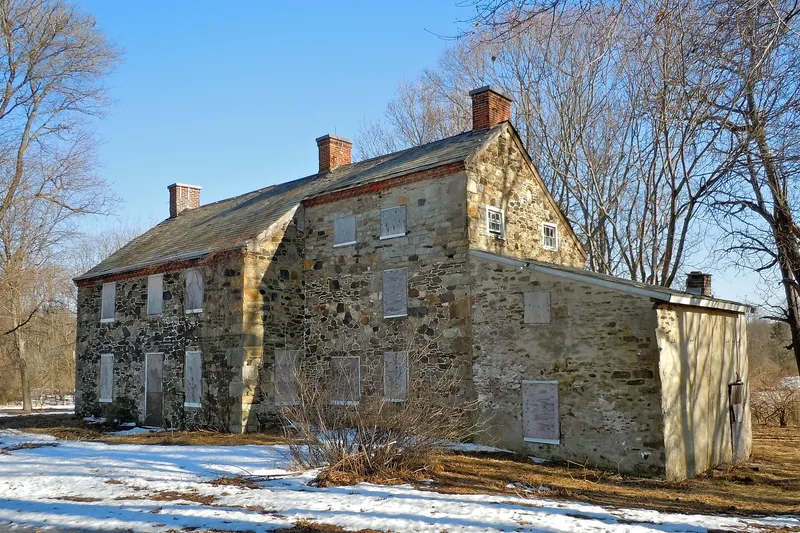
Located on Cheyney Thornton Road in Thornbury Township, Chester County, this 44-acre farmstead was built up from the late 1790s. Its farmhouse began as a three-cell stone and stucco dwelling around 1797, with additions around 1815, 1830 and 1850. Nearby, a stone barn was built around 1804 by Squire Thomas Cheyney and his son William, replacing an older frame barn. Around 1820 a stone-posted frame forebay was added, a form that gave the barn its Chester County Stone-Posted-Forebay designation, and its floorboards could be moved to drop hay to cattle below. Cheyney wrote in 1796 about adopting a new rotation method, which his farm helped demonstrate. The property also includes a granary ruin, an ice house remnant, a spring house, and a walled family cemetery established around 1803. The farm's later dairy output shifted from butter to fluid milk, and the buildings reflect these changes in agricultural practice.
Machine-generated summary. This summary was generated by a language model from the official nomination document and has not been reviewed line by line by an editor. It may contain errors. Check the source document before relying on any detail. Source: nomination document (PDF) · catalog entry. Generated October 2026 (model claude-haiku-5-5, prompt v1.1-2026-10-29).
| Period of significance | C. 1795-c. 1910 |
|---|---|
| Styles | Dornbusch Type E Lake District Barn; Dornbusch Type J Pennsylvania Barn (Chester County Stone-Posted-Forebay Barn) |
| Areas of significance | Architecture, Agriculture |
| Acreage | 44 |
| Boundary source | NPS cultural-resource GIS polygon |
| Full listing page | Cheyney, Squire, Farm (property record) |
What listing means for this property
This is a historic district. Buildings within its boundary are either contributing (they add to the district's significance) or non-contributing. Owners of contributing income-producing buildings can claim the 20% federal rehabilitation tax credit; homeowners should look at state credits. National Register districts impose no design review by themselves; a local historic district ordinance, if one exists, does (the difference explained).
General information, not legal or tax advice. Rules change; confirm with your State Historic Preservation Office or a qualified adviser.