Chester Springs Historic District

Why it's listed
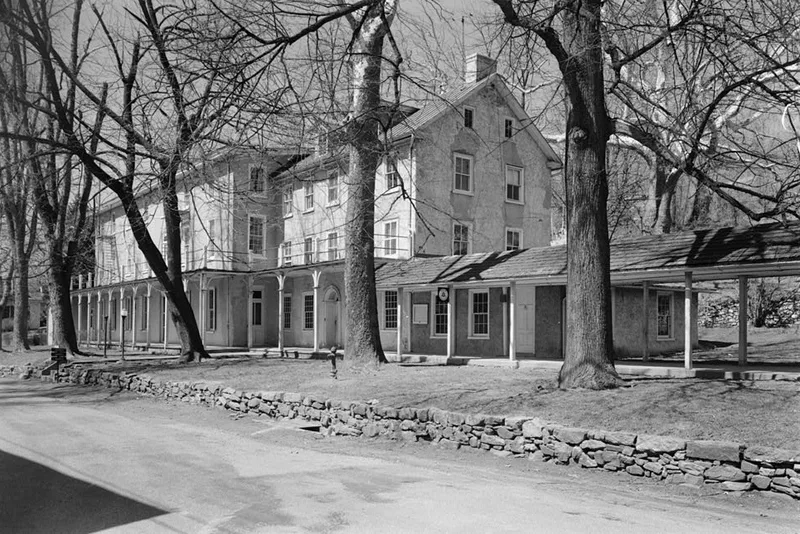
Built around a group of mineral springs in Chester County, Pennsylvania, this 145-acre district centers on buildings along Art School Road. Visitors came for the waters from the 1720s, and an inn stood here by 1750. During the Revolution the Continental Congress had a hospital built on the site in 1777, with Dr. William Shippen, Jr. and Dr. James Craik directing the Middle Department from it. Architect Sebastian Schreiber designed the hospital, which operated until September 1781. Early nineteenth-century owners expanded the hotel, and statesmen including Daniel Webster and Henry Clay are traditionally believed to have visited. Five principal buildings date largely to the 1830s, including the hotel, two large residences, and the stone and stucco Jenny Lind Bath House. The wooden summer house over the Iron Spring is also of that period. The district is regarded as one of the oldest surviving Pennsylvania spas still largely as it was in the first half of the nineteenth century.
Machine-generated summary. This summary was generated by a language model from the official nomination document and has not been reviewed line by line by an editor. It may contain errors. Check the source document before relying on any detail. Source: nomination document (PDF) · catalog entry. Generated October 2026 (model claude-haiku-5-5, prompt v1.1-2026-10-29).
| Areas of significance | Art, Military, Architecture, Social History |
|---|---|
| Acreage | 145 |
| Boundary source | NPS cultural-resource GIS polygon |
| Full listing page | Chester Springs Historic District (property record) |
What listing means for this property
This is a historic district. Buildings within its boundary are either contributing (they add to the district's significance) or non-contributing. Owners of contributing income-producing buildings can claim the 20% federal rehabilitation tax credit; homeowners should look at state credits. National Register districts impose no design review by themselves; a local historic district ordinance, if one exists, does (the difference explained).
General information, not legal or tax advice. Rules change; confirm with your State Historic Preservation Office or a qualified adviser.