Chester Creek Historic District

Why it's listed
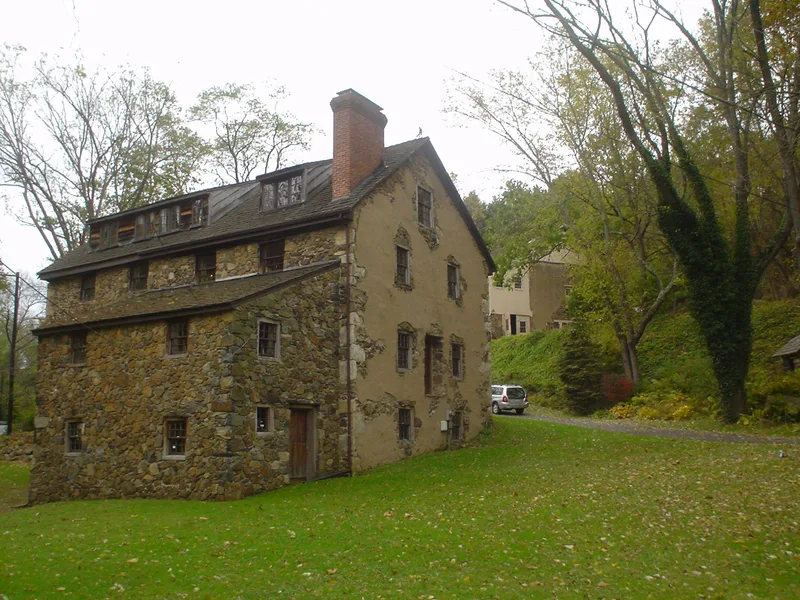
Glen Mills and the surrounding stretch of Chester Creek form a rural district in Thornbury Township, Delaware County, with houses, mills and forges dating from the eighteenth century onward. Taylor's Sarum Forge, one of the earliest iron works in the province, was operated by John Taylor, a surveyor who worked on William Penn's western lands. Persifor Frazier, his son-in-law, served as a captain in the 4th Battalion of Pennsylvania in the Revolutionary War and was captured at Brandywine, later sitting in the Pennsylvania Assembly from 1781 to 1784. The district's stone and log houses, including the Hemphill House with its Federal-style woodwork, show how buildings were altered as owners' fortunes changed. Its workers' cottages, built about 1830 to 1880 in row and duplex forms, are described as among the best surviving examples of working-class domestic architecture of their period in the region. The mills, once numerous, are largely ruined, but the sites preserve material for archaeological study of eighteenth- and nineteenth-century industry.
Machine-generated summary. This summary was generated by a language model from the official nomination document and has not been reviewed line by line by an editor. It may contain errors. Check the source document before relying on any detail. Source: nomination document (PDF) · catalog entry. Generated October 2026 (model claude-haiku-5-5, prompt v1.1-2026-10-29).
| Period of significance | 18th Century-19th Century |
|---|---|
| Areas of significance | Industry, Politics/Government, Architecture |
| Acreage | 512 |
| Boundary source | NPS cultural-resource GIS polygon |
| Full listing page | Chester Creek Historic District (property record) |
What listing means for this property
This is a historic district. Buildings within its boundary are either contributing (they add to the district's significance) or non-contributing. Owners of contributing income-producing buildings can claim the 20% federal rehabilitation tax credit; homeowners should look at state credits. National Register districts impose no design review by themselves; a local historic district ordinance, if one exists, does (the difference explained).
General information, not legal or tax advice. Rules change; confirm with your State Historic Preservation Office or a qualified adviser.