Chatham Village Historic District

Why it's listed
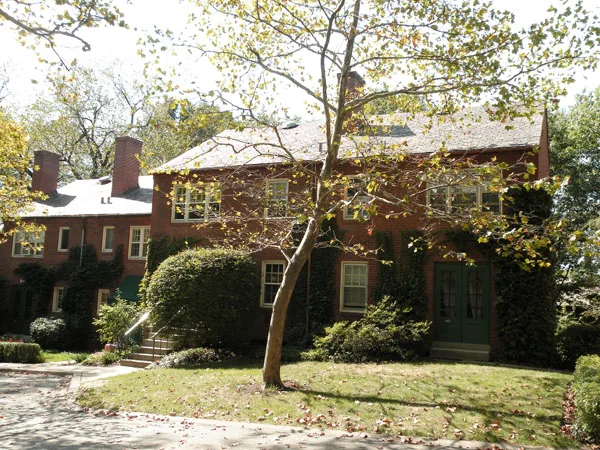
Built in the Mt. Washington hills of Pittsburgh between 1932 and 1956, Chatham Village is a community of 197 attached brick dwellings arranged in courts on a steeply sloping, terraced site. The Buhl Foundation commissioned it as a philanthropic project to provide quality rental housing for moderate-income working families, including Pittsburgh clerical workers. Planners Clarence Stein and Henry Wright adapted the superblock, interior green and reverse-front house design they had tested at Sunnyside Gardens and Radburn, with houses facing private courtyards and service areas facing the streets. The Georgian Revival buildings use red brick, slate roofs and multi-light wood windows, and the grounds include walled terraces, stairways and a wooded greenbelt. The community is valued for its influence on federal housing programs of the 1930s, on garden apartment design, and on later planned suburbs.
Machine-generated summary. This summary was generated by a language model from the official nomination document and has not been reviewed line by line by an editor. It may contain errors. Check the source document before relying on any detail. Source: nomination document (PDF) · catalog entry. Generated October 2026 (model claude-haiku-5-5, prompt v1.1-2026-10-29).
| Period of significance | c. 1929-1956 |
|---|---|
| Styles | Georgian Revival |
| Areas of significance | Community Planning and Development, Landscape Architecture, Architecture |
| Acreage | 46.4 |
| Boundary source | NPS cultural-resource GIS polygon |
| Full listing page | Chatham Village Historic District (property record) |
What listing means for this property
This is a historic district. Buildings within its boundary are either contributing (they add to the district's significance) or non-contributing. Owners of contributing income-producing buildings can claim the 20% federal rehabilitation tax credit; homeowners should look at state credits. National Register districts impose no design review by themselves; a local historic district ordinance, if one exists, does (the difference explained).
General information, not legal or tax advice. Rules change; confirm with your State Historic Preservation Office or a qualified adviser.