Chalfont Historic District

Why it's listed
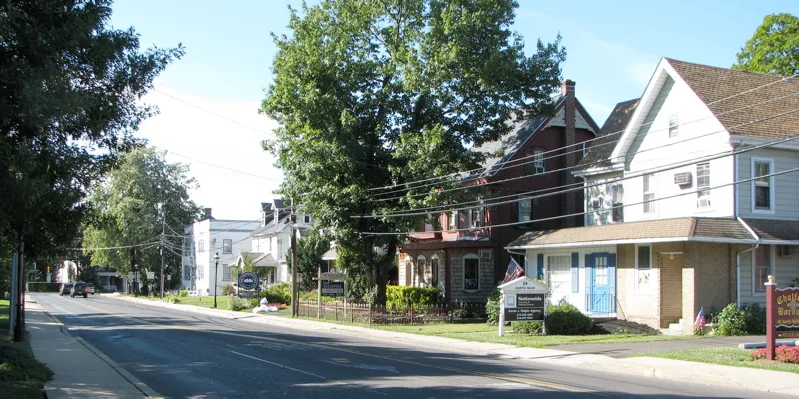
Chalfont grew from a crossroads settlement around mills and taverns on the Neshaminy Creek in Central Bucks County. Kungle's Tavern, on land bought in 1761, stood at the junction of the Limekiln Pike and the Swede's Ford road. The Doylestown Branch of the North Pennsylvania Railroad reached the village in 1856, and a station, hotel and commercial buildings followed. The district's houses span late 18th-century vernacular Georgian and Federal dwellings near Butler Avenue, Gothic Revival and Carpenter Gothic houses with scroll-cut trim, Second Empire and Queen Anne examples, and early 20th-century Colonial Revival and Craftsman buildings. Local architect A. Oscar Martin, whose Doylestown office operated until 1942, designed several of the later buildings, including the 1916 school and the bank building. The district is noted for its collection of carriage houses and for its cohesive streetscape of mostly two-story frame houses.
Machine-generated summary. This summary was generated by a language model from the official nomination document and has not been reviewed line by line by an editor. It may contain errors. Check the source document before relying on any detail. Source: nomination document (PDF) · catalog entry. Generated October 2026 (model claude-haiku-5-5, prompt v1.1-2026-10-29).
| Period of significance | c.1775 to C. 1935 |
|---|---|
| Styles | Georgian; Federal; Gothic Revival; Carpenter Gothic; Queen Anne; Greek Revival; Second Empire; Italianate; Colonial Revival; Prairie style Four Square; Bungalow/Craftsman |
| Areas of significance | Architecture |
| Acreage | 37.6 |
| Boundary source | NPS cultural-resource GIS polygon |
| Full listing page | Chalfont Historic District (property record) |
What listing means for this property
This is a historic district. Buildings within its boundary are either contributing (they add to the district's significance) or non-contributing. Owners of contributing income-producing buildings can claim the 20% federal rehabilitation tax credit; homeowners should look at state credits. National Register districts impose no design review by themselves; a local historic district ordinance, if one exists, does (the difference explained).
General information, not legal or tax advice. Rules change; confirm with your State Historic Preservation Office or a qualified adviser.