Carversville Historic District

Why it's listed
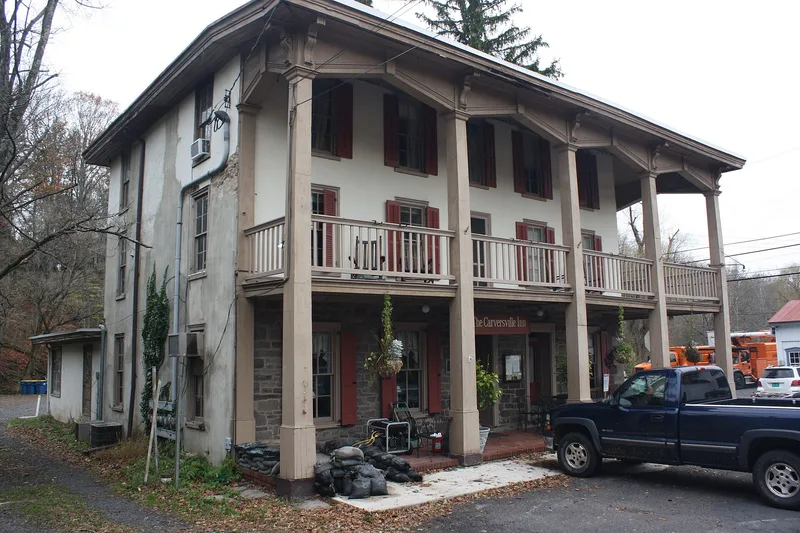
Carversville is a small rural village in a valley formed by the three forks of the Paunacussing Creek, with roads descending steeply to a central square. Its 18th and 19th century houses, many built of pointed stone, frame or French Huguenot clay block, line the streets, and most were built as farmhouses or village homes. The earliest surviving structures date to around 1703 and include the Overpeck homestead, once owned by Thomas Ellicott, whose brother Andrew Ellicott later became Surveyor General of the United States. Barcroft Mill, first recorded in 1730, was among the earliest grist mills in the valley and survives as a converted residence and studio. Growth peaked between 1840 and 1875, when the village supported tanneries, saw mills, a wheelwright, carriage works, a hotel and several stores. The village was named Carversville after George Carver, its first postmaster, when a post office was established in 1833. Its Christian Church, built in 1866, and the former Presbyterian church of 1873 are among its prominent buildings.
Machine-generated summary. This summary was generated by a language model from the official nomination document and has not been reviewed line by line by an editor. It may contain errors. Check the source document before relying on any detail. Source: nomination document (PDF) · catalog entry. Generated October 2026 (model claude-haiku-5-5, prompt v1.1-2026-10-29).
| Period of significance | 1700-1875 |
|---|---|
| Styles | Colonial, Federal, Victorian, Country Federal, French Huguenot clay block construction, Country Gothic |
| Areas of significance | Agriculture, Architecture |
| Acreage | 188 |
| Boundary source | NPS cultural-resource GIS polygon |
| Full listing page | Carversville Historic District (property record) |
What listing means for this property
This is a historic district. Buildings within its boundary are either contributing (they add to the district's significance) or non-contributing. Owners of contributing income-producing buildings can claim the 20% federal rehabilitation tax credit; homeowners should look at state credits. National Register districts impose no design review by themselves; a local historic district ordinance, if one exists, does (the difference explained).
General information, not legal or tax advice. Rules change; confirm with your State Historic Preservation Office or a qualified adviser.