Carlisle Historic District

Why it's listed
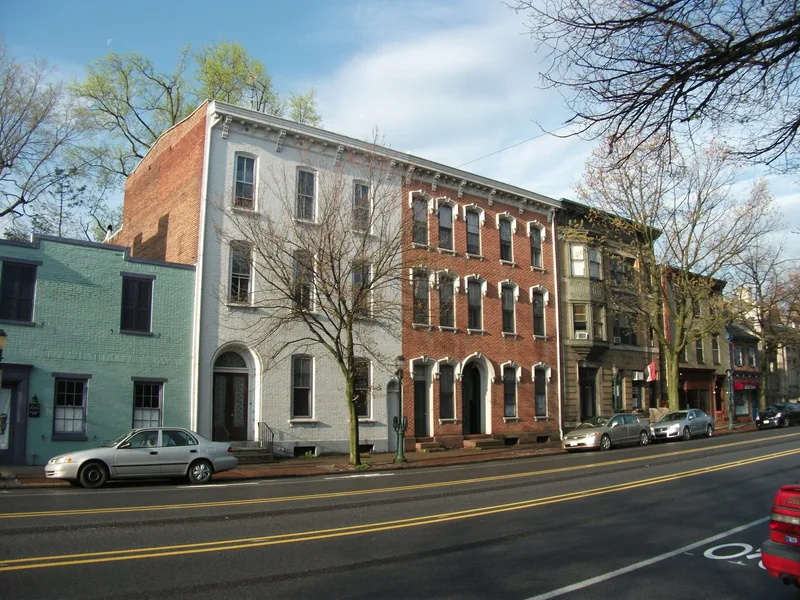
Carlisle's historic district in Cumberland County, Pennsylvania, covers the downtown core of a town laid out in 1751 as the seat of the newly created Cumberland County. Its roughly 800 buildings range from late-18th-century log, brick and rubble stone houses to late Victorian commercial blocks and 20th-century civic buildings. Much of the district reflects the late 19th century, when prosperity from the regional grain trade and local industry created demand for middle-class housing, producing numerous two-and-a-half-story brick houses in the half Georgian plan. The district served as the county's market, legal and service center through the first half of the twentieth century, with retail sales and shops drawing shoppers from a wide surrounding region. Its commercial buildings, courthouse and municipal architecture document that role, and its concentration of intact buildings is valued for preserving a small-town character. The nomination also links the district to James Wilson, a signer of the Declaration of Independence, and to Colonel Ephraim Blaine, a financial supporter of the American Revolution.
Machine-generated summary. This summary was generated by a language model from the official nomination document and has not been reviewed line by line by an editor. It may contain errors. Check the source document before relying on any detail. Source: nomination document (PDF) · catalog entry. Generated October 2026 (model claude-haiku-5-5, prompt v1.1-2026-10-29).
| Period of significance | 1751-1950 |
|---|---|
| Styles | Late Victorian, Italianate, Colonial Revival, Georgian Revival, Romanesque Revival, Late Gothic Revival, Classic Revival, Beaux Arts Classic, Art Deco |
| Areas of significance | Commerce, Politics/Government, Architecture |
| Acreage | 154 |
| Boundary source | NPS cultural-resource GIS polygon |
| Full listing page | Carlisle Historic District (property record) |
What listing means for this property
This is a historic district. Buildings within its boundary are either contributing (they add to the district's significance) or non-contributing. Owners of contributing income-producing buildings can claim the 20% federal rehabilitation tax credit; homeowners should look at state credits. National Register districts impose no design review by themselves; a local historic district ordinance, if one exists, does (the difference explained).
General information, not legal or tax advice. Rules change; confirm with your State Historic Preservation Office or a qualified adviser.