Bryn Athyn Historic District

Why it's listed
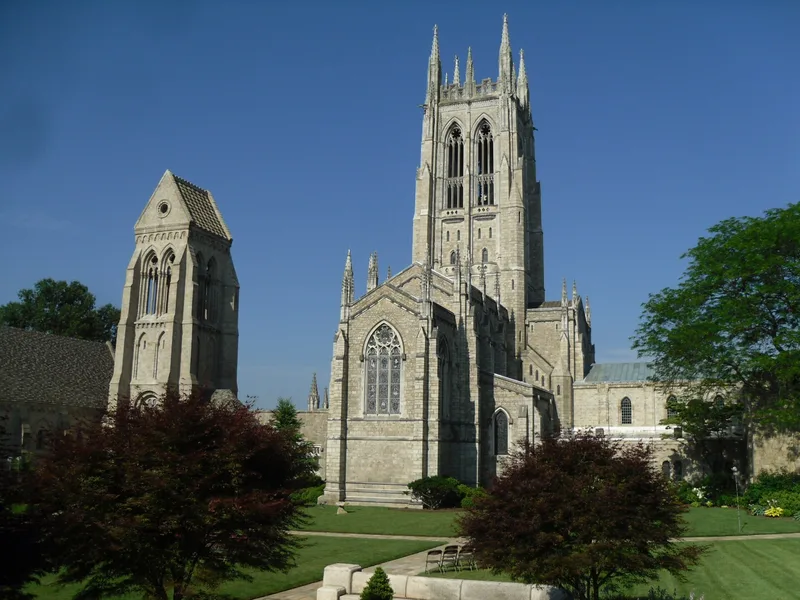
Bryn Athyn is a hilltop community north of Philadelphia, and its historic district holds four principal buildings built by the Pitcairn family between 1892 and 1938. John Pitcairn, founder of the Pittsburgh Plate Glass Company, began the estate Cairnwood, designed by Carrère and Hastings in 1892 and completed in 1895 in Roman brick and limestone. The Bryn Athyn Cathedral, begun in 1914 on a design by Ralph Adams Cram and completed by 1929 under Raymond Pitcairn, was built in granite and limestone by craft workshops using medieval guild methods, with on-site stained glass. Cairncrest, designed in 1926 for Harold Pitcairn, and Glencairn, built by Raymond between 1929 and 1938, followed. The district is regarded as a rare Arts and Crafts venture because its craft shops worked for the family and a sacred purpose rather than for sale, and its buildings retain high physical integrity.
Machine-generated summary. This summary was generated by a language model from the official nomination document and has not been reviewed line by line by an editor. It may contain errors. Check the source document before relying on any detail. Source: nomination document (PDF) · catalog entry. Generated October 2026 (model claude-haiku-5-5, prompt v1.1-2026-10-29).
| Period of significance | 1892-1938 |
|---|---|
| Styles | Late Gothic Revival; Beaux Arts; Romanesque Revival; Bungalow/Craftsman |
| Areas of significance | Architecture, Art, Transportation |
| Acreage | 37.7 |
| Boundary source | NPS cultural-resource GIS polygon |
| Full listing page | Bryn Athyn Historic District (property record) |
What listing means for this property
This is a historic district. Buildings within its boundary are either contributing (they add to the district's significance) or non-contributing. Owners of contributing income-producing buildings can claim the 20% federal rehabilitation tax credit; homeowners should look at state credits. National Register districts impose no design review by themselves; a local historic district ordinance, if one exists, does (the difference explained).
General information, not legal or tax advice. Rules change; confirm with your State Historic Preservation Office or a qualified adviser.