Brownsburg Village Historic District

Why it's listed
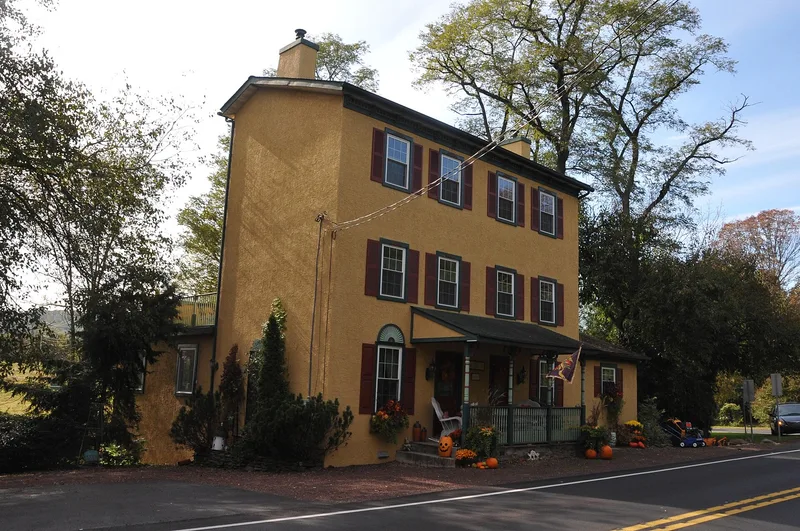
Brownsburg lies along River Road near the Delaware River in Upper Makefield Township, a hamlet that grew from a ferry and fishery site first operated around 1760. Most of its buildings were erected between about 1810 and 1840, largely under merchant Stacy Brown, who built or bought the houses on the west side of the road and ran the store, hotel and mill. The houses are set close to the road in a steady pattern of two-and-a-half-story gable-roofed frames and stone buildings, with a few larger Brown family houses showing Victorian detailing. The village includes a converted ferry tavern, a store with a second-floor supply door, tenements with attached shops, and two large barns. The district is also linked to the Delaware Division of the Pennsylvania Canal and its bridge abutments. Its listing reflects its commercial history, its tenement housing, and its unusually complete early 19th-century appearance.
Machine-generated summary. This summary was generated by a language model from the official nomination document and has not been reviewed line by line by an editor. It may contain errors. Check the source document before relying on any detail. Source: nomination document (PDF) · catalog entry. Generated October 2026 (model claude-haiku-5-5, prompt v1.1-2026-10-29).
| Period of significance | 1760-c. 1935 |
|---|---|
| Styles | Early Republican/Federal; Late Victorian/Italianate |
| Areas of significance | Commerce, Architecture |
| Acreage | 23 |
| Boundary source | NPS cultural-resource GIS polygon |
| Full listing page | Brownsburg Village Historic District (property record) |
What listing means for this property
This is a historic district. Buildings within its boundary are either contributing (they add to the district's significance) or non-contributing. Owners of contributing income-producing buildings can claim the 20% federal rehabilitation tax credit; homeowners should look at state credits. National Register districts impose no design review by themselves; a local historic district ordinance, if one exists, does (the difference explained).
General information, not legal or tax advice. Rules change; confirm with your State Historic Preservation Office or a qualified adviser.