Brewerytown Historic District

Why it's listed
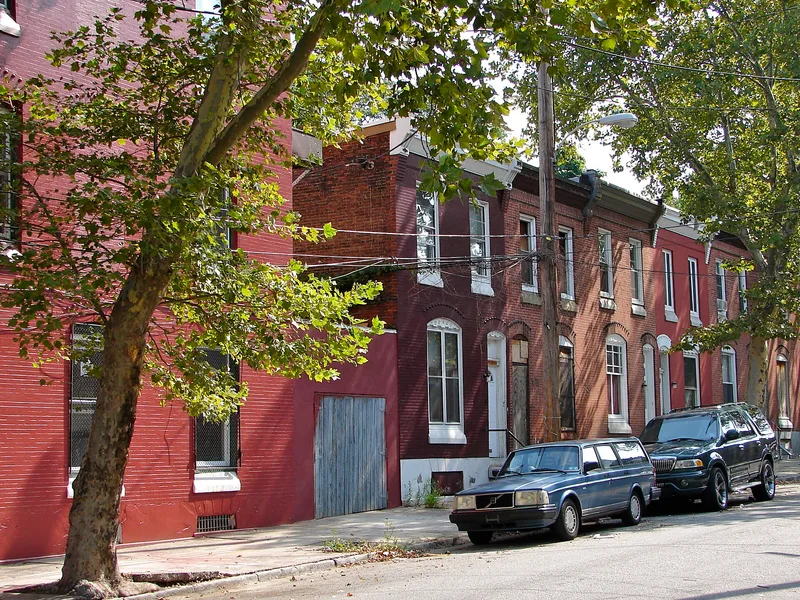
Brewerytown is a district of brick brewery buildings, workers' rowhouses and brewers' mansions laid out along 31st Street between Girard and Glenwood Avenues in north Philadelphia. Its brewing industry grew after the Civil War, when German lager brewers moved to the Schuylkill palisades, where cool caves allowed beer to be stored. Ten breweries clustered within a few blocks, including Bergner and Engel, Arnholt and Schaefer, and Poth. Otto Wolf and William Decker designed most of the major buildings, using dark red brick, round-arched openings and corbeled cornices in a German style. The Poth complex, enlarged in 1904 from Wolf's plans, still stands. Brewers' houses on Girard Avenue and company housing on Baltz Street and Bergner and Engel rows show how owners controlled the workforce. Prohibition ended brewing, and the 1922 Acme Markets building replaced part of the Arnholt and Schaefer complex. The district is regarded as an unusually complete record of an industry that shaped Philadelphia's economy and architecture.
Machine-generated summary. This summary was generated by a language model from the official nomination document and has not been reviewed line by line by an editor. It may contain errors. Check the source document before relying on any detail. Source: nomination document (PDF) · catalog entry. Generated October 2026 (model claude-haiku-5-5, prompt v1.1-2026-10-29).
| Period of significance | 1870-1930 |
|---|---|
| Styles | Queen Anne; Romanesque; Victorian Eclectic |
| Areas of significance | Industry, Architecture |
| Acreage | 34.8 |
| Boundary source | NPS cultural-resource GIS polygon |
| Full listing page | Brewerytown Historic District (property record) |
What listing means for this property
This is a historic district. Buildings within its boundary are either contributing (they add to the district's significance) or non-contributing. Owners of contributing income-producing buildings can claim the 20% federal rehabilitation tax credit; homeowners should look at state credits. National Register districts impose no design review by themselves; a local historic district ordinance, if one exists, does (the difference explained).
General information, not legal or tax advice. Rules change; confirm with your State Historic Preservation Office or a qualified adviser.