Boiling Springs Historic District

Why it's listed
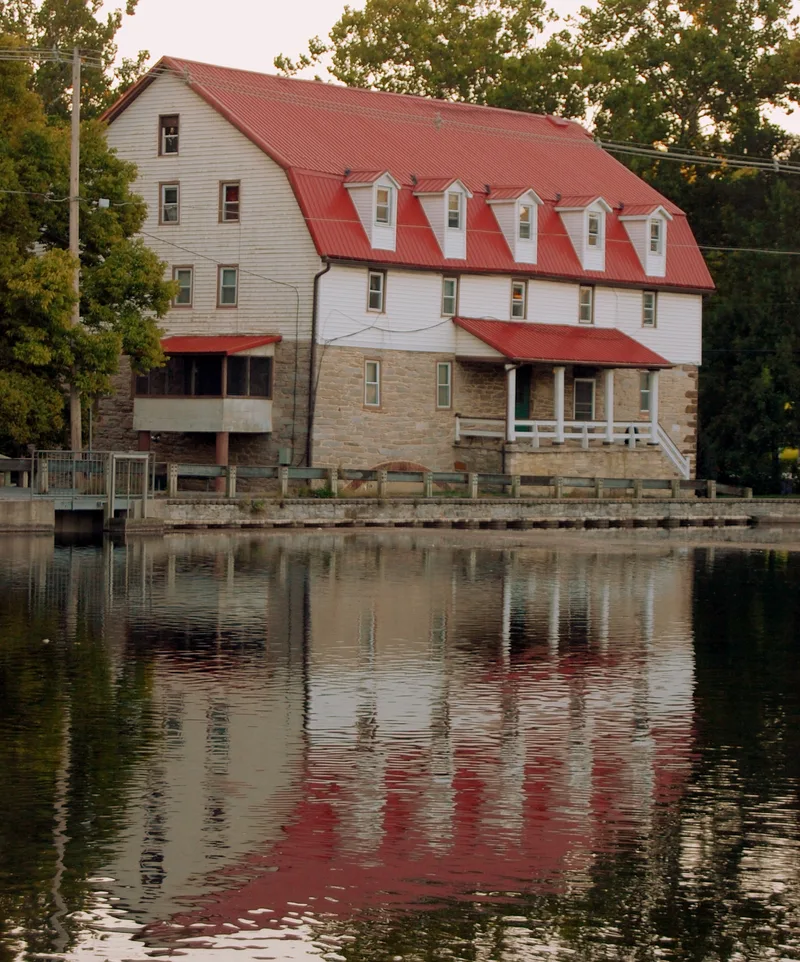
Boiling Springs is a village in Cumberland County, Pennsylvania, grown up around a spring-fed lake that feeds a sevenacre basin of water. A grist mill was established there in the 1730s and 1740s, and an iron forge followed on the east shore around 1750, later known as the Carlisle Iron Works. During the Revolution the works made cannon and munitions for the Continental Army. Michael Ege, who became sole owner in 1792, built a Georgian ironmaster's mansion in 1795 that still overlooks the lake. The village was formally laid out in 1845 on a grid of streets, and its houses range from Federal and Italianate dwellings to Gothic, Second Empire and Queen Anne examples. In the 1850s, Daniel Kauffman's home was the focus of a widely publicised case over sheltering escaped slaves. Late in the century a trolley park drew visitors from across the valley until it closed in 1930. The district is listed for its architecture, industrial history, and recreational past.
Machine-generated summary. This summary was generated by a language model from the official nomination document and has not been reviewed line by line by an editor. It may contain errors. Check the source document before relying on any detail. Source: nomination document (PDF) · catalog entry. Generated October 2026 (model claude-haiku-5-5, prompt v1.1-2026-10-29).
| Period of significance | 1750-1930 |
|---|---|
| Styles | Federal with Italianate; Georgian; Gothic Villa; Second Empire; Queen Anne; Bungalow |
| Areas of significance | Industry, Entertainment/Recreation, Architecture, Social History |
| Acreage | 27.9 |
| Boundary source | NPS cultural-resource GIS polygon |
| Full listing page | Boiling Springs Historic District (property record) |
What listing means for this property
This is a historic district. Buildings within its boundary are either contributing (they add to the district's significance) or non-contributing. Owners of contributing income-producing buildings can claim the 20% federal rehabilitation tax credit; homeowners should look at state credits. National Register districts impose no design review by themselves; a local historic district ordinance, if one exists, does (the difference explained).
General information, not legal or tax advice. Rules change; confirm with your State Historic Preservation Office or a qualified adviser.