Black Moshannon State Park Maintenance District

The National Park Service has not published a boundary polygon for this district; the map shows the listed properties inside it and the district's reference point.
Why it's listed
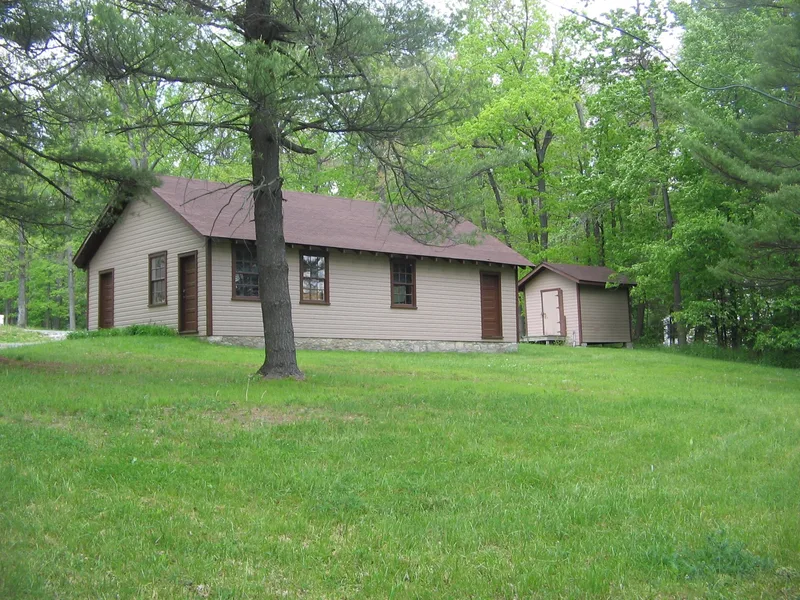
Along Munson Road on the northeast edge of Black Moshannon State Park in Centre County, a small maintenance area was built by the Civilian Conservation Corps from 1933 to 1937 while Camp S-71 operated at Beaver Meadows near Philipsburg. The district includes a storage and maintenance building, a two-story garage and maintenance building with a three-bay garage on the first story, a gas pump house whose roof extends over the pump, and a one-and-a-half-story residence. All are wood frame with clapboard siding, except the residence, which has aluminum siding. The buildings follow standard military designs the CCC used for non-public park facilities, and they are regarded as models for the many structures the military later built during World War II. The district also reflects the CCC's broader role in developing public outdoor recreation and in employing thousands of young men during the Depression. A 1978 maintenance shop within the boundaries is excluded from the count of contributing resources.
Machine-generated summary. This summary was generated by a language model from the official nomination document and has not been reviewed line by line by an editor. It may contain errors. Check the source document before relying on any detail. Source: nomination document (PDF) · catalog entry. Generated October 2026 (model claude-haiku-5-5, prompt v1.1-2026-10-29).
| Period of significance | 1933-1937 |
|---|---|
| Areas of significance | Landscape Architecture, Conservation, Politics/Government, Architecture, Social History |
| Acreage | 2.8 |
| Boundary source | not published |
| Full listing page | Black Moshannon State Park Maintenance District (property record) |
What listing means for this property
This is a historic district. Buildings within its boundary are either contributing (they add to the district's significance) or non-contributing. Owners of contributing income-producing buildings can claim the 20% federal rehabilitation tax credit; homeowners should look at state credits. National Register districts impose no design review by themselves; a local historic district ordinance, if one exists, does (the difference explained).
General information, not legal or tax advice. Rules change; confirm with your State Historic Preservation Office or a qualified adviser.