Athens Historic District

Why it's listed
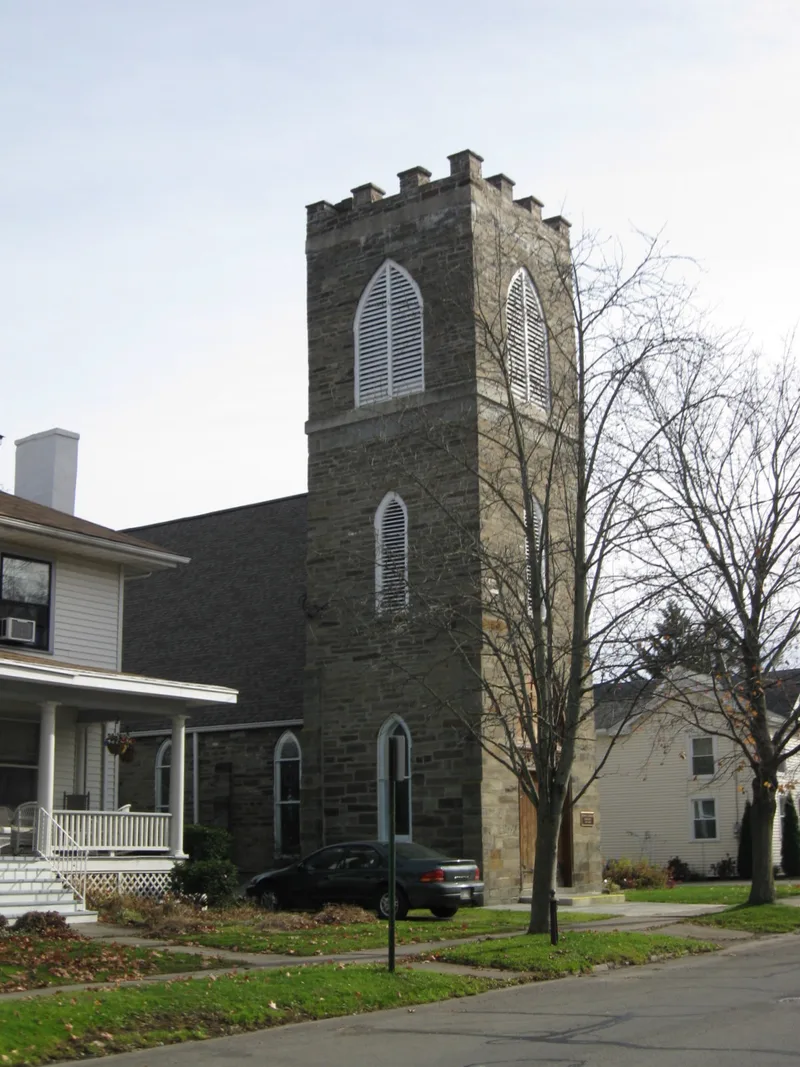
Athens Historic District lies along South Main Street in the Borough of Athens, on a peninsula between the Chemung and Susquehanna Rivers in northeastern Pennsylvania. Its long lots were laid out by the Connecticut Susquehanna Company in 1786 and run from one river to the other. The district holds 98 contributing resources, mostly houses built between 1801 and about 1935. Its Greek Revival houses date largely from 1825 to 1860, and the brick house at 615 South Main Street, built between 1841 and 1843 with a full-height Ionic porch, is regarded as the most high-style example. Italianate and Gothic Revival residences also appear, including 617 South Main Street, built in 1851 for Col. Charles F. Welles. Later Queen Anne houses reflect prosperity from iron works and the North Branch Canal. The district also includes churches, a cemetery, the Spalding Memorial Library and Tioga Point Museum from 1897, and the Protection of the Flag Monument from 1902.
Machine-generated summary. This summary was generated by a language model from the official nomination document and has not been reviewed line by line by an editor. It may contain errors. Check the source document before relying on any detail. Source: nomination document (PDF) · catalog entry. Generated October 2026 (model claude-haiku-5-5, prompt v1.1-2026-10-29).
| Period of significance | 1801 circa 1935 |
|---|---|
| Styles | Queen Anne, Greek Revival, Italianate, Classical Revival |
| Areas of significance | Architecture, Social History, Art |
| Acreage | 88 |
| Boundary source | NPS cultural-resource GIS polygon |
| Full listing page | Athens Historic District (property record) |
What listing means for this property
This is a historic district. Buildings within its boundary are either contributing (they add to the district's significance) or non-contributing. Owners of contributing income-producing buildings can claim the 20% federal rehabilitation tax credit; homeowners should look at state credits. National Register districts impose no design review by themselves; a local historic district ordinance, if one exists, does (the difference explained).
General information, not legal or tax advice. Rules change; confirm with your State Historic Preservation Office or a qualified adviser.