Academy Hill Historic District

Why it's listed
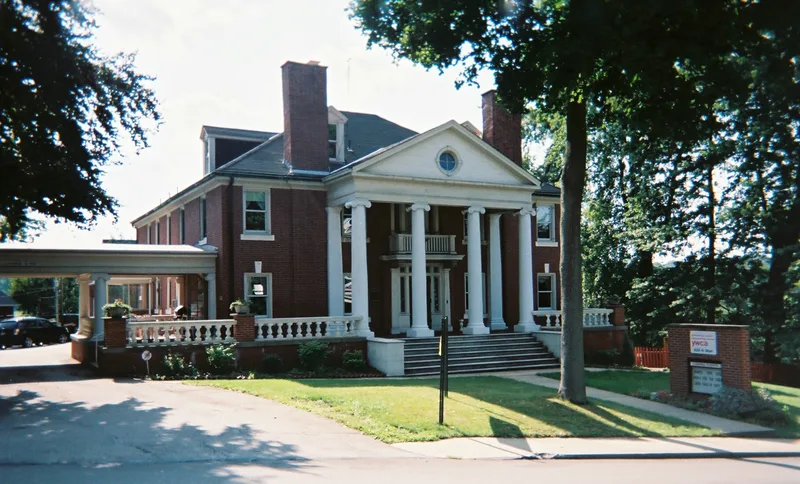
Residential streets on the hill north of Greensburg's commercial core hold the Academy Hill Historic District, developed largely between 1880 and 1930 on land that once surrounded the town's first public school, established on the site in 1810. Four subdivisions shaped its layout, beginning with the Culbertson Plan of 1882 and followed by the Metzgar, Jamison-Fogg and Barclay Place additions. Wealthy industrialists built high-style houses on North Main Street, North Maple Avenue and the upper Walnut Avenue blocks, while middle-income families and workers settled the lower slopes. The district contains 23 architectural styles and many eclectic variations, with Colonial Revival, Queen Anne, Shingle Style and Tudor Revival among the common types. Paul Bartholomew designed several houses, and Ralph Adams Cram designed the Huff Mansion at 424 North Main Street. The Blessed Sacrament Cathedral, completed in 1928, and the 1927 Greensburg High School also stand within its boundaries.
Machine-generated summary. This summary was generated by a language model from the official nomination document and has not been reviewed line by line by an editor. It may contain errors. Check the source document before relying on any detail. Source: nomination document (PDF) · catalog entry. Generated October 2026 (model claude-haiku-5-5, prompt v1.1-2026-10-29).
| Period of significance | 1880-1948 |
|---|---|
| Areas of significance | Architecture |
| Acreage | 63.5 |
| Boundary source | NPS cultural-resource GIS polygon |
| Full listing page | Academy Hill Historic District (property record) |
What listing means for this property
This is a historic district. Buildings within its boundary are either contributing (they add to the district's significance) or non-contributing. Owners of contributing income-producing buildings can claim the 20% federal rehabilitation tax credit; homeowners should look at state credits. National Register districts impose no design review by themselves; a local historic district ordinance, if one exists, does (the difference explained).
General information, not legal or tax advice. Rules change; confirm with your State Historic Preservation Office or a qualified adviser.