Woodlawn Cemetery
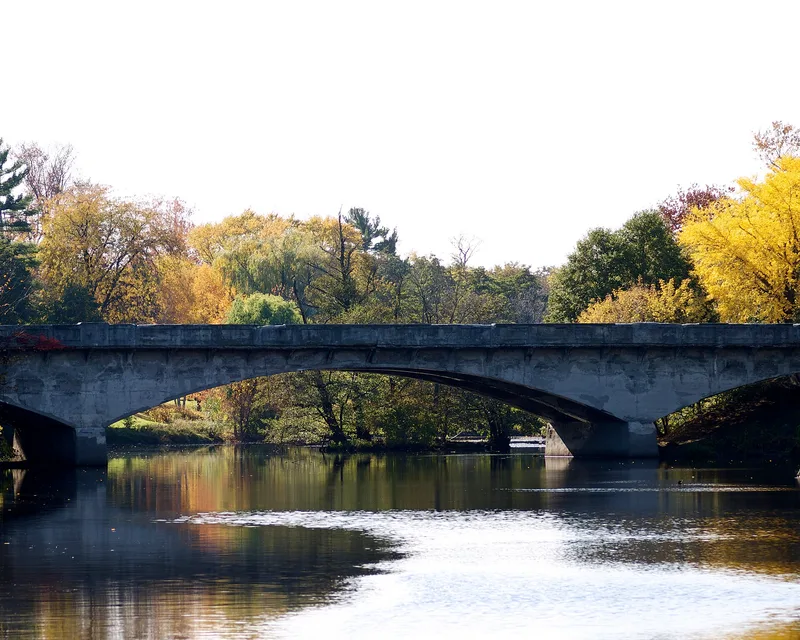

Why it's listed
Woodlawn Cemetery in Toledo, Ohio, is a rural-style burial ground laid out in the 1870s on the landscape lawn plan promoted by Adolph Strauch. Philadelphia landscape architect Edward Schwagerl drew its original lot and section plan, which is still followed. Winding roads cross gently rolling ground, and two connected ornamental lakes with small islands anchor the design. Trees of about 300 species and a bird population of some 200 species add to the park-like character. The grounds hold four contributing buildings, including a Romanesque limestone office of 1903 built around a bell tower and a chapel dedicated in 1883 that became a crematory chapel in 1923. A two-mile iron fence dates from 1915 and a concrete bridge from 1913. Forty-two private mausoleums, some neoclassical or Egyptian Revival with Tiffany glass and bronze doors, and distinctive monuments illustrate funerary design. The cemetery also reflects Toledo's growth, as the expanding city reached its edge by 1908.
Machine-generated summary. This summary was generated by a language model from the official nomination document and has not been reviewed line by line by an editor. It may contain errors. Check the source document before relying on any detail. Source: nomination document (PDF) · catalog entry. Generated October 2026 (model claude-sonnet-5-5, prompt v1.0-2026-10-29).
| Period of significance | 1876-1953 |
|---|---|
| Styles | Late 19th and 20th Century Revivals: Classical Revivals (Neo-classical), Late Gothic Revival, Exotic Revival (Egyptian Revival); Romanesque office building |
| Areas of significance | Architecture, Landscape Architecture |
| Acreage | 159.1 |
| Boundary source | NPS cultural-resource GIS polygon |
| Full listing page | Woodlawn Cemetery (property record) |
What listing means for this property
This is a historic district. Buildings within its boundary are either contributing (they add to the district's significance) or non-contributing. Owners of contributing income-producing buildings can claim the 20% federal rehabilitation tax credit; homeowners should look at state credits. National Register districts impose no design review by themselves; a local historic district ordinance, if one exists, does (the difference explained).
General information, not legal or tax advice. Rules change; confirm with your State Historic Preservation Office or a qualified adviser.