Washington Cemetery Historic District

Why it's listed
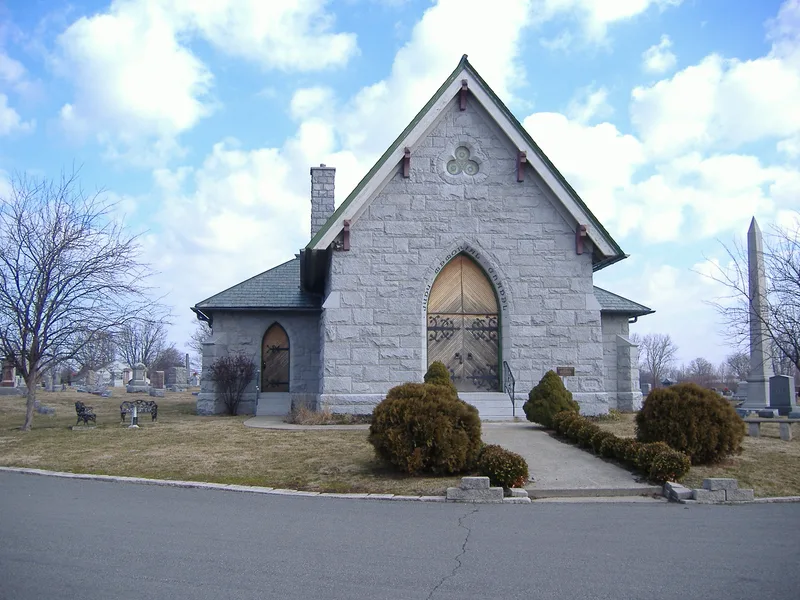
Washington Cemetery is a burial ground on the east edge of Washington Court House, Ohio, laid out in 1856 on ten acres and enlarged in 1870 with a second tract of about thirteen acres. The first tract follows a rectangular plan with a mounded center and flagpole, while the second uses winding drives and rolling ground typical of the mid-19th-century "Rural" Cemetery movement. Together the tracts hold 9,386 burials and the cemetery's most important monuments and buildings, including Judy Chapel. Soldiers Rows set aside space for Union veterans, among them thirty-six members of the United States Colored Troops buried between 1887 and 1939. The centerpiece is a three-tiered cast iron and zinc fountain, added in 1892 and made by J. W. Fiske & Co. of New York. It was moved in 1904 and again after a restoration completed in the early 2000s, then rededicated in 2005. The district was listed for its landscape design and funerary features.
Machine-generated summary. This summary was generated by a language model from the official nomination document and has not been reviewed line by line by an editor. It may contain errors. Check the source document before relying on any detail. Source: nomination document (PDF) · catalog entry. Generated October 2026 (model claude-sonnet-5-5, prompt v1.0-2026-10-29).
| Styles | Late 19th and early 20th Century Revival |
|---|---|
| Areas of significance | Landscape Architecture, Black, Art, Architecture |
| Acreage | 23.5 |
| Boundary source | NPS cultural-resource GIS polygon |
| Full listing page | Washington Cemetery Historic District (property record) |
What listing means for this property
This is a historic district. Buildings within its boundary are either contributing (they add to the district's significance) or non-contributing. Owners of contributing income-producing buildings can claim the 20% federal rehabilitation tax credit; homeowners should look at state credits. National Register districts impose no design review by themselves; a local historic district ordinance, if one exists, does (the difference explained).
General information, not legal or tax advice. Rules change; confirm with your State Historic Preservation Office or a qualified adviser.