Union Cemetery-Beatty Park

Why it's listed
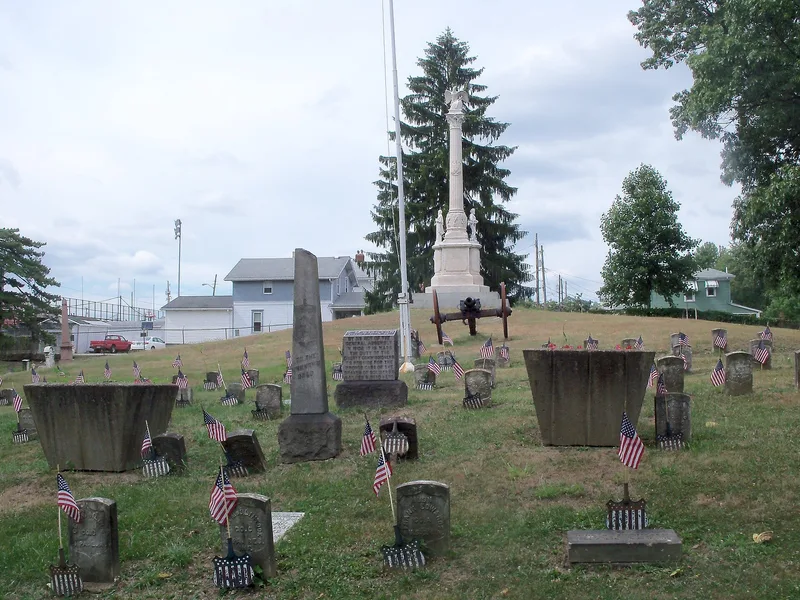
Union Cemetery and Beatty Park share a steep hillside and ravine about a mile west of downtown Steubenville, Ohio. The cemetery was dedicated in 1854 on land chosen for its rustic, picturesque character, and the southern ravine was intended from the start as public recreation ground. The city acquired 100 acres as Beatty Park in 1930, adding stone entrances, picnic shelters, a swimming pool and a garage in 1931. The grounds follow the 'rural' or 'lawn' cemetery plan first seen at Mount Auburn in Boston, with looping roads, preserved natural topography, native vegetation and controlled monument design. Notable structures include a stone chapel from 1892, a Gothic Revival receiving vault, a group of sandstone mausoleums, a Soldiers and Sailors Monument from 1870, and stone bridges built by Floto & Swartz in the 1880s. The original layout has not been altered by later roads or buildings, which supports the property's standing as an early and well-preserved Ohio example of its type.
Machine-generated summary. This summary was generated by a language model from the official nomination document and has not been reviewed line by line by an editor. It may contain errors. Check the source document before relying on any detail. Source: nomination document (PDF) · catalog entry. Generated October 2026 (model claude-sonnet-5-5, prompt v1.0-2026-10-29).
| Period of significance | 1854-1931 |
|---|---|
| Styles | Late Gothic Revival mausoleums and receiving vault; picturesque English idiom administration building; rural/lawn cemetery landscape plan |
| Areas of significance | Community Planning and Development, Landscape Architecture, Art |
| Acreage | 250 |
| Boundary source | NPS cultural-resource GIS polygon |
| Full listing page | Union Cemetery-Beatty Park (property record) |
What listing means for this property
This is a historic district. Buildings within its boundary are either contributing (they add to the district's significance) or non-contributing. Owners of contributing income-producing buildings can claim the 20% federal rehabilitation tax credit; homeowners should look at state credits. National Register districts impose no design review by themselves; a local historic district ordinance, if one exists, does (the difference explained).
General information, not legal or tax advice. Rules change; confirm with your State Historic Preservation Office or a qualified adviser.