U.S. Grant Birthplace and Grant Commemorative Sites Historic District

The National Park Service has not published a boundary polygon for this district; the map shows the listed properties inside it and the district's reference point.
Why it's listed
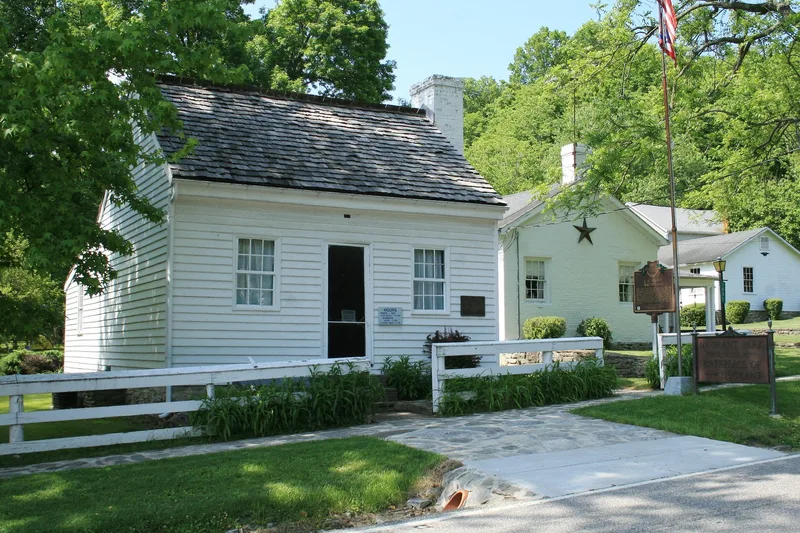
Point Pleasant, a small hamlet on the Ohio River east of Cincinnati, is the birthplace of Ulysses S. Grant, and this four-acre district gathers the places that commemorate that fact. At its core is the Grant Birthplace, a one-story timber-frame house with a limestone foundation, furnished as it might have looked at his birth. Nearby are a brick caretaker's house from about 1820 with 1936 additions by the Columbus firm Goller, Harsh & Davies, a 1936-37 garage, and Grant Memorial Park. Stone pylons, bronze beacons and plaques from the 1920s bridge survive, though the bridge span itself was replaced in 1984. Limestone retaining walls, flagstone walks, gutters and a parking lot were built with Works Progress Administration labor around 1937. The State of Ohio acquired the park in 1925, an early public preservation effort. The district was listed for its role in commemorating Grant and in the growth of tourism tied to his Clermont County origins, with a period of significance from about 1864 to 1948.
Machine-generated summary. This summary was generated by a language model from the official nomination document and has not been reviewed line by line by an editor. It may contain errors. Check the source document before relying on any detail. Source: nomination document (PDF) · catalog entry. Generated October 2026 (model claude-sonnet-5-5, prompt v1.0-2026-10-29).
| Period of significance | ca. 1864-1948 |
|---|---|
| Styles | No style |
| Areas of significance | Entertainment/Recreation, Conservation |
| Acreage | 4 |
| Boundary source | not published |
| Full listing page | U.S. Grant Birthplace and Grant Commemorative Sites Historic District (property record) |
What listing means for this property
This is a historic district. Buildings within its boundary are either contributing (they add to the district's significance) or non-contributing. Owners of contributing income-producing buildings can claim the 20% federal rehabilitation tax credit; homeowners should look at state credits. National Register districts impose no design review by themselves; a local historic district ordinance, if one exists, does (the difference explained).
General information, not legal or tax advice. Rules change; confirm with your State Historic Preservation Office or a qualified adviser.