Tuscarawas Avenue-Alexander Square Commercial Historic District

Why it's listed
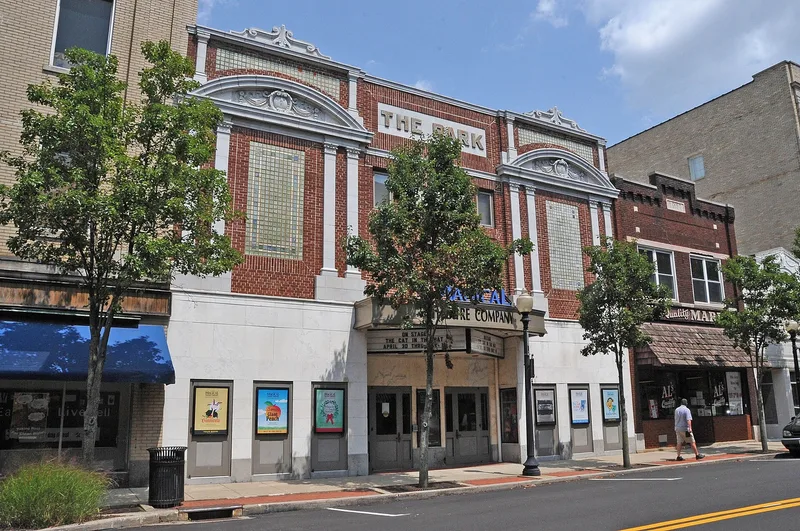
Downtown Barberton, Ohio, contains a compact district of 15 buildings along one block of Tuscarawas Avenue and facing Lake Anna Park on Park Avenue. Built between 1891 and 1938, mostly in the 1920s, the buildings range from one to four stories and use brick, terra cotta, tile and sandstone. Highlights include the 1891 Tracy Block, the city's first three-story brick business block, and the 1928 Weisberger Building, which housed its first department store. Three early theaters add variety: the Pastime and Park with classical terra cotta facades, and the 1938 Lake Theater in Art Moderne style with Tennessee sandstone and glass block. Park Avenue holds a 1925 funeral home and a 1925 Masonic Temple. The district reflects the growth of the planned industrial town founded by O. C. Barber in 1891, and it is regarded as the city's most cohesive and intact commercial streetscape. Only the 1954 municipal building is non-contributing.
Machine-generated summary. This summary was generated by a language model from the official nomination document and has not been reviewed line by line by an editor. It may contain errors. Check the source document before relying on any detail. Source: nomination document (PDF) · catalog entry. Generated October 2026 (model claude-sonnet-5-5, prompt v1.0-2026-10-29).
| Period of significance | 1891-1938 |
|---|---|
| Styles | Late 19th and 20th Century Revivals: Classical Revival, Art Moderne |
| Areas of significance | Community Planning and Development, Commerce, Architecture |
| Acreage | 4 |
| Boundary source | NPS cultural-resource GIS polygon |
| Full listing page | Tuscarawas Avenue-Alexander Square Commercial Historic District (property record) |
What listing means for this property
This is a historic district. Buildings within its boundary are either contributing (they add to the district's significance) or non-contributing. Owners of contributing income-producing buildings can claim the 20% federal rehabilitation tax credit; homeowners should look at state credits. National Register districts impose no design review by themselves; a local historic district ordinance, if one exists, does (the difference explained).
General information, not legal or tax advice. Rules change; confirm with your State Historic Preservation Office or a qualified adviser.