Temperance Row Historic District

The National Park Service has not published a boundary polygon for this district; the map shows the listed properties inside it and the district's reference point.
Why it's listed
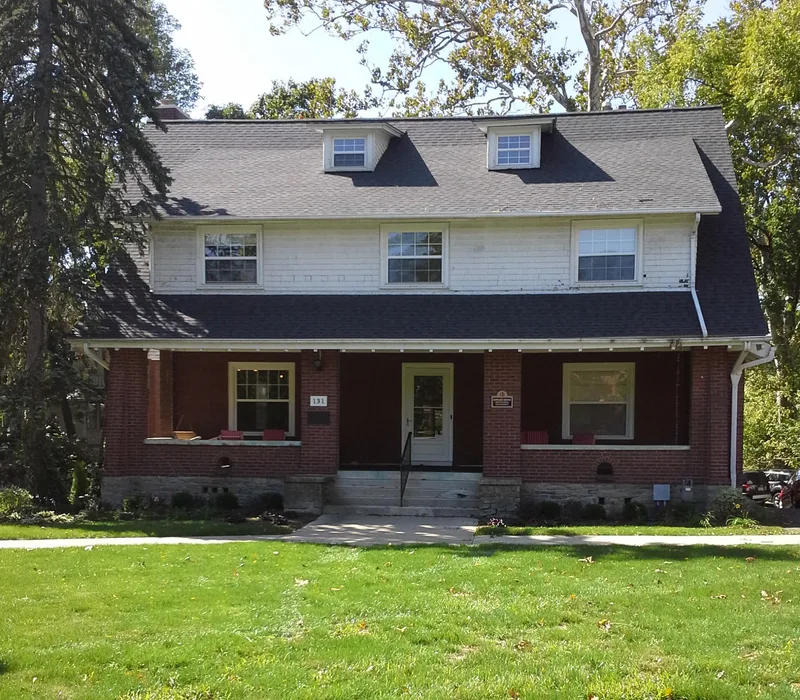
Temperance Row is an 11-acre residential neighborhood in Westerville, Ohio, bounded by Alum Creek, Otterbein College and Otterbein Cemetery. It began in 1910 when Anti-Saloon League of America General Superintendent Purley Baker built a brick and clapboard bungalow at Park and Grove Streets. Other league leaders, editors, field agents and publishing staff followed, including founder Howard Hyde Russell and publisher Ernest Cherrington, who platted the Elmwood Addition in 1911 and built a six-unit brick rowhouse in 1917. The district has 43 contributing resources, mostly houses and garages from 1910 to 1935. Many follow Craftsman design, with bungalows, American Four Squares and gable-front houses, and several use cobblestones from nearby Alum Creek. A few mid-19th century frame houses predate the league's arrival. Park, Grove and Plum Streets keep their early 1900s brick paving. The neighborhood is significant for its link to the national temperance organization during the period 1910 to 1935.
Machine-generated summary. This summary was generated by a language model from the official nomination document and has not been reviewed line by line by an editor. It may contain errors. Check the source document before relying on any detail. Source: nomination document (PDF) · catalog entry. Generated October 2026 (model claude-sonnet-5-5, prompt v1.0-2026-10-29).
| Period of significance | 1910-1935 |
|---|---|
| Styles | Bungalow/Craftsman; Colonial Revival; No Style |
| Areas of significance | Architecture, Social History |
| Acreage | 11 |
| Boundary source | not published |
| Full listing page | Temperance Row Historic District (property record) |
What listing means for this property
This is a historic district. Buildings within its boundary are either contributing (they add to the district's significance) or non-contributing. Owners of contributing income-producing buildings can claim the 20% federal rehabilitation tax credit; homeowners should look at state credits. National Register districts impose no design review by themselves; a local historic district ordinance, if one exists, does (the difference explained).
General information, not legal or tax advice. Rules change; confirm with your State Historic Preservation Office or a qualified adviser.