South High Street Commercial Grouping

Why it's listed
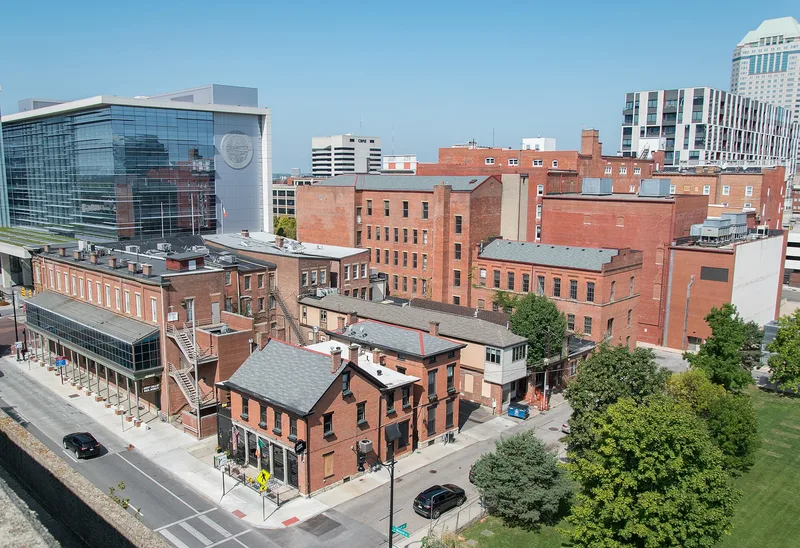
This two-acre group of eleven commercial buildings sits at the southern end of downtown Columbus along South High Street. Most are two to three stories and date from the late 19th century, with details such as cast iron storefronts, bracketed cornices, decorative lintels, and stone piers. The Southern Hotel and Theatre, completed in 1896-97 with a Sullivanesque theatre entrance, and the 1895 Schlee-Kemmler Building, with its five-story rusticated sandstone facade, anchor the group. The Fresch Brothers Saloon at 350 South High, built in 1878, is a well-preserved Italianate example. The block matters for two reasons. It is one of the last cohesive, human-scale streetscapes left downtown, surrounded by parking and newer development. It also represents the German commercial district that once lined South High Street, tied to brewers, saloon keepers, printers, and insurance men who built and used these buildings. Most other German-associated landmarks nearby have been demolished.
Machine-generated summary. This summary was generated by a language model from the official nomination document and has not been reviewed line by line by an editor. It may contain errors. Check the source document before relying on any detail. Source: nomination document (PDF) · catalog entry. Generated October 2026 (model claude-sonnet-5-5, prompt v1.0-2026-10-29).
| Period of significance | 1800-1899, 1900- (specific dates 1870s, 1914) |
|---|---|
| Styles | Late 19th century commercial, including Italianate, Sullivanesque, and Colonial and Georgian Revival elements |
| Areas of significance | Commerce, Architecture |
| Acreage | 2 |
| Boundary source | NPS cultural-resource GIS polygon |
| Full listing page | South High Street Commercial Grouping (property record) |
What listing means for this property
This is a historic district. Buildings within its boundary are either contributing (they add to the district's significance) or non-contributing. Owners of contributing income-producing buildings can claim the 20% federal rehabilitation tax credit; homeowners should look at state credits. National Register districts impose no design review by themselves; a local historic district ordinance, if one exists, does (the difference explained).
General information, not legal or tax advice. Rules change; confirm with your State Historic Preservation Office or a qualified adviser.